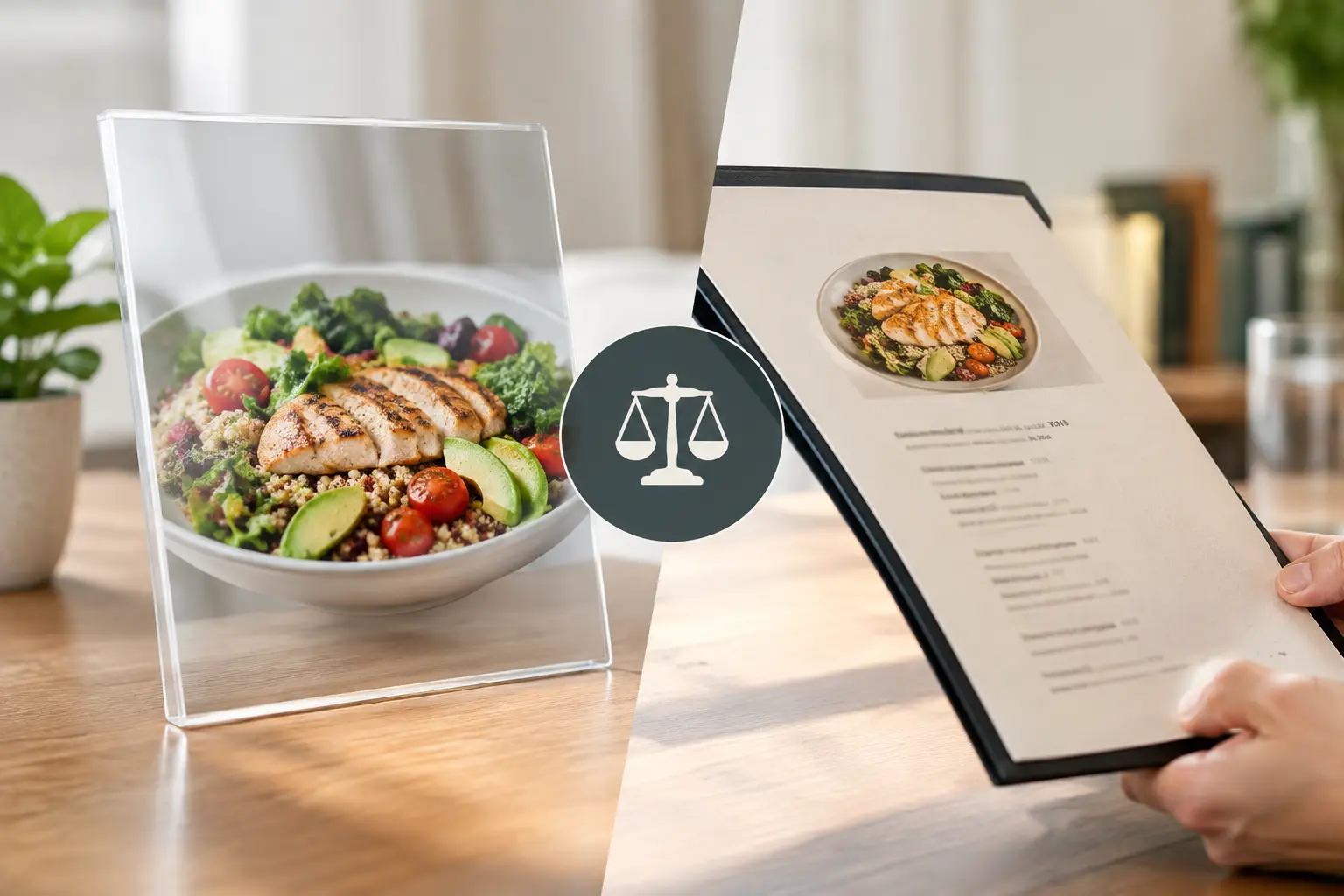
The menu says “crispy chicken,” “house sauce,” and “seasonal vegetables.” But is the chicken breaded or grilled? Is the sauce a light drizzle or a heavy coating? Are those vegetables a colorful side or three lonely pieces of broccoli? Dish transparency vs menu descriptions comes down to one simple question: can diners confidently understand what they are paying for before they order?
For many people, a written description is only part of the decision. A real photo provides the context that words often miss: portion size, presentation, toppings, texture, color, and how the dish is actually served. That clarity can turn a stressful guess into a meal someone feels good about choosing.
Dish Transparency vs Menu Descriptions: The Real Difference
Menu descriptions are designed to communicate. They can name ingredients, call out preparation methods, and make a dish sound appealing. A strong description can tell you that a burger includes caramelized onions, smoked cheddar, and a brioche bun. It can explain that a curry is spicy, or that a salad includes nuts.
Transparency goes further. It helps diners see the finished item in a real-world context. Is the burger tall enough to be hard to eat? Does the curry look creamy or thin? Is the salad packed with ingredients or mostly greens? These are reasonable questions, especially when restaurant prices, delivery fees, and dietary needs make a disappointing order more costly.
The difference is not that descriptions are bad and photos are good. Both have a job to do. Text can communicate details a picture cannot, including ingredients, allergens, spice level, substitutions, and dietary information. But a description alone asks diners to fill in too many blanks.
Why Menu Language Can Leave People Guessing
Restaurant language is often built to create appetite, not certainty. Terms like “signature,” “loaded,” “fresh,” “generous,” and “chef-inspired” can mean very different things from one restaurant to the next. Even specific-sounding descriptions can leave out the details that shape whether a meal feels satisfying.
Portion size is a common example. “Shrimp pasta” might arrive as a generous entrée, a small appetizer portion, or a bowl dominated by sauce. A photo cannot provide an exact measurement, but it gives diners a much better sense of scale than a two-line description.
Then there is the gap between expectation and reality. A diner may imagine a neatly composed rice bowl with bright vegetables, only to receive a container where everything is mixed together and one ingredient takes over. That does not necessarily mean the restaurant did anything wrong. It means the menu did not provide enough information for the person ordering.
For delivery and takeout, the need for clarity is even stronger. Diners cannot walk past a plate on its way to another table, ask a server what a dish looks like, or make a last-minute switch after seeing it arrive. They are making a purchase from a screen, often while hungry, rushed, or ordering for several people.
Transparency Is Also an Accessibility Issue
Food decisions are not equally easy for everyone. People with visual impairments may use screen readers and rely heavily on descriptions that need to be clear, structured, and useful. People who experience decision fatigue may find a long, text-heavy menu exhausting, especially when every dish sounds vaguely similar.
Real dish images can reduce uncertainty for diners who process information visually. At the same time, photos should never replace accessible text. A truly inclusive menu experience pairs accurate imagery with meaningful labels, clear dish names, ingredient details, dietary tags, and well-written image descriptions for people using assistive technology.
That combination matters because accessibility is not one-size-fits-all. One diner may need a better image to understand the dish. Another may need clear text because an image is not accessible to them. Someone else may need both to decide whether a dish fits their dietary preferences, sensory needs, budget, or appetite.
Transparency also respects the fact that a food choice is personal. Some people want to avoid messy meals before a work meeting. Others need to see whether ingredients are separated or mixed. A parent may want to know if a kids’ meal is a realistic amount of food. These are not picky concerns. They are practical decisions that deserve practical information.
The Best Menus Use Photos and Words Together
A photo without context can create its own problems. A beautiful image may not reveal whether a dish contains dairy, whether a sauce is spicy, or whether the pictured version includes an add-on. A photo may also be outdated after a recipe, garnish, or portion changes.
The strongest experience brings the visual and written details together. The image answers, “What will this look like?” The description answers, “What is in it?” Clear labels answer, “Will it work for me?”
For example, a photo of tacos can show how many come in an order, their size, the tortilla style, and whether they are topped with a lot of sauce. The menu text can clarify the protein, salsa, allergens, spice level, and available modifications. Neither format has to carry the full burden alone.
Restaurants do not need studio-perfect food photography for this to work. In fact, overly styled images can undermine trust if the actual dish looks very different. Useful photos are well lit, current, and honest about what diners receive. They show the whole plate or container, not just one dramatic close-up that hides the portion.
Community Photos Can Make Transparency More Honest
A restaurant’s own photo shows how it intends to present a dish. Community-contributed photos can show how the meal looks across real visits, different locations, and takeout orders. That creates a more complete picture, especially for dishes that vary slightly by preparation or season.
There are trade-offs. User-uploaded images can be uneven in lighting and quality. A photo may show an older version of a menu item, a modified order, or food after it has traveled in a delivery bag. That is why context matters. Helpful platforms make room for dish names, dates, location details, and updates when a menu changes.
Still, authenticity has real value. A quick, honest photo from a fellow diner can answer the question polished marketing sometimes avoids: what does this actually look like when it arrives? That is the kind of confidence Pic-ture That!™ is built to support, while giving diners a way to contribute photos and earn rewards for helping others order with more clarity.
What Diners Should Look for Before Ordering
When choosing between a menu description and a dish photo, look for agreement between the two. Does the image match the listed ingredients? Does it show the portion and format clearly? If the photo looks heavily styled, check whether other diner photos show a similar meal.
Pay attention to what is missing, too. If a dish is described as spicy, the menu should say something useful about the heat level. If an image shows a topping that is not mentioned, it may be an add-on or garnish rather than a standard part of the dish. If you have allergies or strict dietary needs, text-based ingredient and cross-contact information remains essential.
For restaurants, the opportunity is straightforward: less uncertainty can mean fewer unhappy surprises. Clearer visuals help diners choose dishes that fit their expectations, which can reduce regret, remakes, complaints, and wasted food. More importantly, it tells customers their decision deserves respect.
Make the Next Order Easier
Nobody should have to decode vague language, imagine portion sizes, or gamble on a meal because a menu leaves too much unsaid. A good description gives diners the facts. An accurate photo gives them a feel for the food. Together, they make ordering more accessible, more informed, and a lot more human.
The next time a menu asks you to take a leap of faith, look for the details that let you choose with confidence. And when you have a real photo of a dish, sharing it can make someone else’s next meal a little easier too.
Leave a Reply