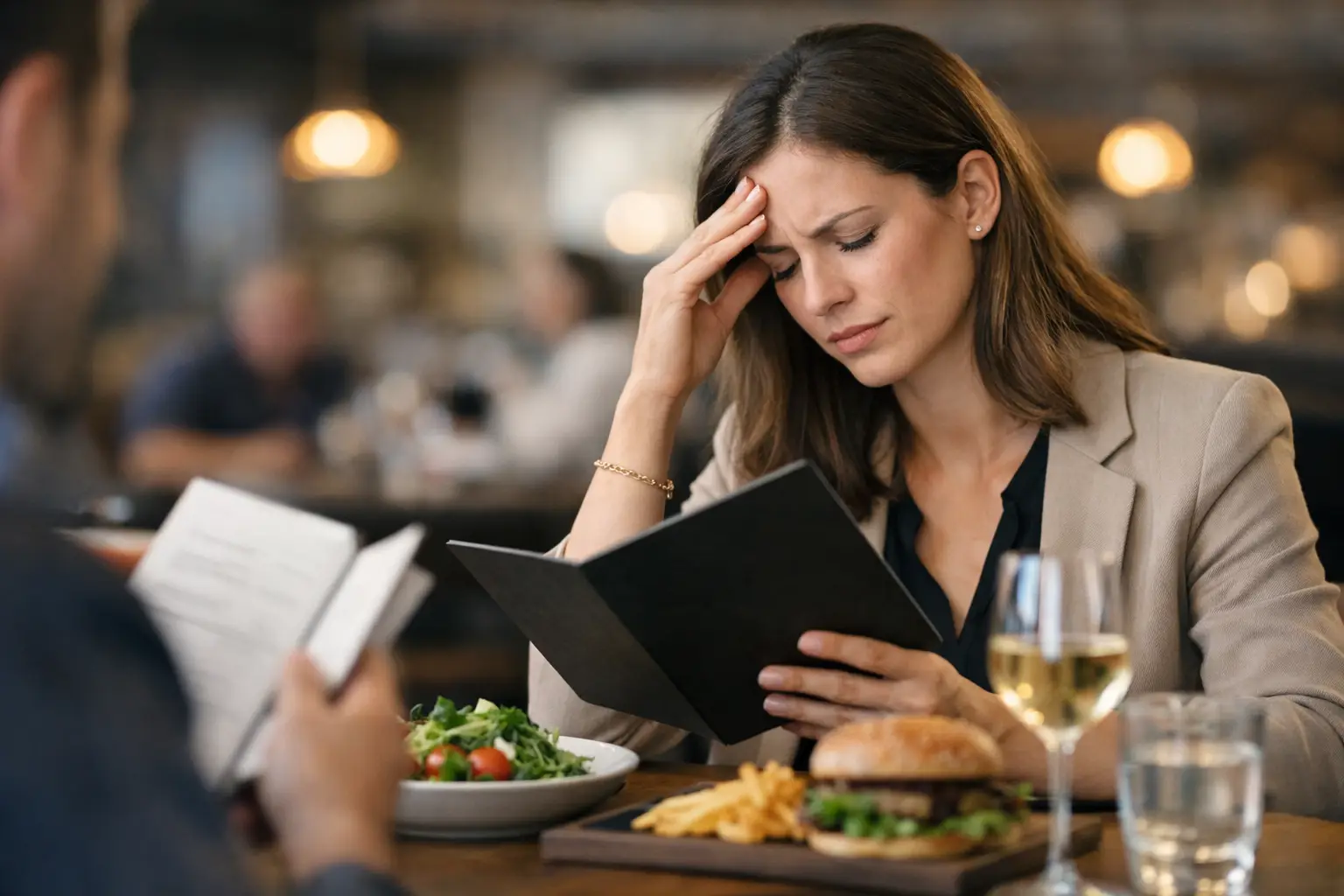
A menu should help you choose dinner, not make dinner feel like another task on an already crowded to-do list. Yet decision fatigue restaurants create is very real: a wall of unfamiliar dish names, modifiers, prices, dietary labels, and vague descriptions can turn a simple order into a stressful guess. When you cannot picture what will arrive, the pressure gets higher – especially when your money, time, hunger, and dietary needs are on the line.
For some diners, that uncertainty is a small annoyance. For others, including people who experience anxiety, cognitive overload, visual impairments, or sensory sensitivities, it can be the reason they stick to the same “safe” order or avoid trying new places altogether. Better restaurant decision-making is not about pushing people to order faster. It is about giving every diner enough clarity to choose with confidence.
Why Decision Fatigue Happens at Restaurants
Decision fatigue is the mental weariness that can build after making many choices. By the time someone opens a delivery app, meets friends after work, or sits down at a restaurant, they may have already spent the day choosing what to prioritize, answer, buy, schedule, and solve. A menu with 80 options is not arriving in a vacuum.
Restaurants often add friction without meaning to. Menus may use creative names that reveal little about the food. Descriptions can leave out portion size, texture, preparation style, or key ingredients. A dish called “The Firebird” might sound exciting, but is it a spicy fried chicken sandwich, a grilled chicken bowl, or something entirely different? The diner has to do extra work to find out.
Then there is the fear of getting it wrong. A meal can be expensive, particularly for delivery after fees and tips. Diners may worry that a dish will be too spicy, too small, overly rich, not filling enough, or simply unlike what they expected. When a menu offers only text, people are asked to imagine the final plate before they commit their money.
Too much choice can make this worse. More options can be useful when diners have specific dietary needs or cravings. But when every option feels unclear, a large menu can lead to hesitation, defaulting to the cheapest item, choosing the same order again, or abandoning the order entirely.
What Makes a Restaurant Menu Easier to Use
The best menus do not treat clarity as boring. They make room for personality while giving diners the practical details they need. A memorable dish name can stay, but it should be supported by a plain-language description that explains the main ingredients, cooking method, and flavor profile.
Specificity matters. “Creamy parmesan pasta” is more useful when diners know whether it includes grilled chicken, mushrooms, a rich Alfredo-style sauce, or a lighter lemon-parmesan finish. “Spicy” is more helpful when a restaurant signals whether it means a gentle warmth, a medium kick, or heat that takes over the meal. Small details reduce the need to ask, guess, or regret.
Menu organization also matters. Grouping dishes by type, highlighting customer favorites, and showing clear dietary information can help diners narrow their options without feeling pushed. The goal is not to hide choices. It is to give people a sensible path through them.
This is where real dish photography can change the experience. Seeing the actual meal provides information text often cannot: the portion, plating, sauce level, ingredient balance, and overall style of the dish. A photo will not answer every question, but it can quickly tell a diner whether a meal looks like what they had in mind.
Authenticity is essential. Overly styled promotional images may look beautiful while setting expectations the kitchen cannot meet during a busy Friday night. Real, accurate photos are more valuable because they support an informed choice. They show diners what is actually being ordered, not just what is being advertised.
Decision Fatigue at Restaurants Is Also an Accessibility Issue
Restaurants are often discussed as a matter of taste and convenience. They are also a matter of access. Every diner deserves a reasonable way to understand what they are ordering before spending money.
People with visual impairments may use screen readers, ask a friend for help, or rely on staff to describe a menu. That is why images should never replace clear text. Digital menus need descriptive labels that work with assistive technology, while restaurant staff should be ready to answer questions without making diners feel rushed or singled out. Accessibility works best when there are multiple ways to get the same essential information.
Visual information can still be valuable for many people who process information more easily through images, including diners who experience decision fatigue or have difficulty translating menu language into a mental picture. A clear image can reduce cognitive load by answering several practical questions at once: Is this a salad or a grain bowl? Is the portion appetizer-sized? Does the dish look heavily sauced? Are the vegetables a side note or the center of the plate?
Sensory needs deserve consideration, too. Texture, mixed ingredients, spice, and presentation can influence whether a meal feels enjoyable or overwhelming. Restaurants do not need to make every menu clinical or exhaustive. They can simply make it easier to identify the information that changes a diner’s decision.
How Diners Can Make Ordering Less Draining
You cannot control every menu, but you can reduce the work of choosing. Start with the decision that matters most to you that day. Maybe it is staying within a budget, finding something filling, avoiding a certain ingredient, or trying a new cuisine without taking a big risk. One priority gives you a filter before the options start piling up.
It also helps to decide on a category before studying every dish. Choosing “something warm and protein-forward” or “a shareable appetizer and one entrée” is easier than comparing an entire menu at once. If you are ordering with others, give yourself permission to choose a reliable favorite rather than treating every meal as a research project.
When photos are available, use them alongside descriptions rather than treating either as the whole story. A photo can show the scale and style of a meal, while the description can flag ingredients, allergens, and preparation details that may not be visible. If the two do not match, or the information is still unclear, asking a direct question is worth it.
There is also no shame in building a personal shortlist. Keeping a few restaurants or dishes you know work for you can make busy nights easier. Reliable choices create breathing room, and that breathing room can make it more enjoyable to experiment when you actually want to.
What Restaurants Gain When Diners Feel Confident
Clearer menus are not only good for diners. They can help restaurants set better expectations, reduce disappointment, and build trust. A customer who knows what they are getting is less likely to feel misled when the meal arrives. That can mean fewer avoidable complaints, fewer back-and-forth questions, and more repeat orders.
The trade-off is that creating accurate menu information takes effort. Restaurants need to update descriptions when recipes change and avoid using photos that no longer reflect the dish. But transparency is worth maintaining. A slightly imperfect, honest photo is often more useful than a polished image that creates the wrong expectation.
Community-powered food photos can help fill the gap, especially as menus evolve. Pic-ture That!™ is built around this idea: diners can see real meals before ordering while contributors help create more useful menu coverage and earn rewards for sharing their experiences. When people share what showed up on their table, they help the next diner make a more confident call.
The most thoughtful dining experiences do not demand that everyone order the same way. Some people love a long menu and a spontaneous choice. Others want a short list, a familiar dish, and a clear picture. Restaurants that offer clarity make room for both.
The next time a menu makes you pause, look for information that helps you picture the meal, not just its name. A confident order does more than prevent disappointment – it leaves more room for the part of dining that should matter most: enjoying the food and the people around you.
Leave a Reply