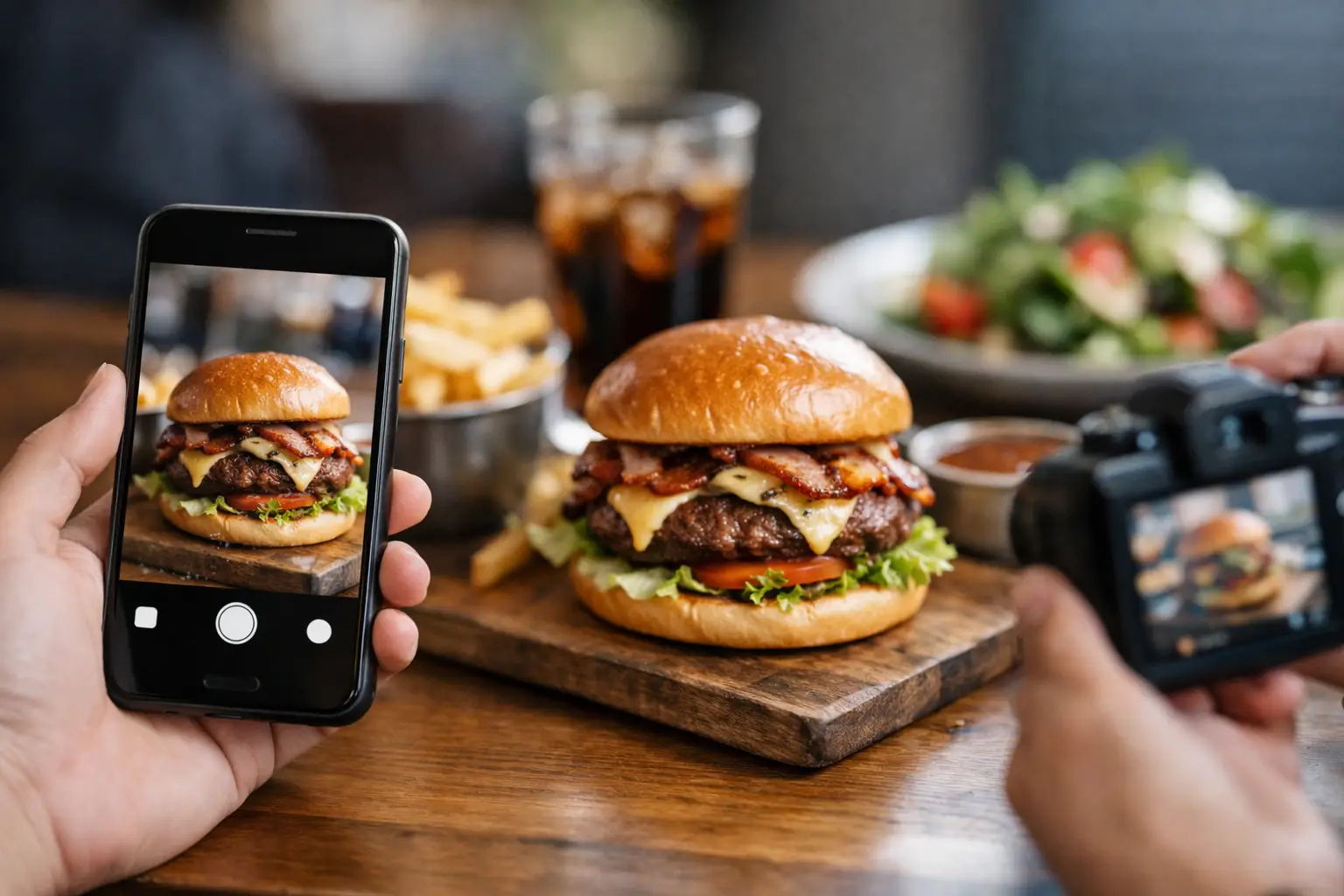
You know the feeling. The menu says crispy, loaded, house-made, chef-inspired – and then the plate arrives looking nothing like what you pictured. That gap is exactly why an app for real restaurant food photos matters. When you can see what a dish actually looks like before you order it, you make better choices, waste less money, and walk into the meal with a lot more confidence.
For a lot of diners, this is more than curiosity. It is about accessibility, certainty, and not having to gamble on a meal from a few vague words. Real food photos help people compare portion sizes, spot ingredients, understand presentation, and avoid the frustration of ordering blind. That shift sounds simple, but it changes the entire restaurant experience.
What an app for real restaurant food photos actually solves
Most restaurant menus still rely on text descriptions that leave too much open to interpretation. A dish can sound spicy but be mild, look large on paper but arrive tiny, or include ingredients that were never obvious from the menu wording. Professional marketing photos do not always fix that problem either. They are often polished to sell, not to inform.
An app built around real restaurant food photos solves a different problem. It gives diners authentic, user-shared images that reflect what comes out of the kitchen in real life. That means less guesswork and fewer disappointing orders.
This is especially valuable for people who need visual information to make confident dining decisions. If you have low vision, decision fatigue, sensory preferences, dietary concerns, or just a limited budget, seeing the actual dish first can make ordering feel much more manageable. A better photo library does not just help people choose faster. It helps them choose with less stress.
Why real photos matter more than polished restaurant images
There is nothing wrong with a restaurant wanting to present food well. The issue is that staged imagery and real-world ordering are not the same thing. Lighting, plating, editing, and portion styling can all create expectations that the everyday version of the dish does not meet.
Real photos give you context. You can see whether the burger is stacked high or flat, whether the pasta is heavy on sauce, whether the salad is mostly greens or topped generously, and whether the dessert is worth the splurge. You also get clues that matter to actual diners, like how a side is served, how ingredients are distributed, or whether a dish looks easy to eat on the go.
That kind of transparency builds trust. It respects the fact that ordering food is a purchase decision, not a guessing game.
The best app for real restaurant food photos should do more than show pretty pictures
If an app is going to be truly useful, it cannot just collect random snapshots. It needs to help people make decisions quickly and confidently. That starts with image quality, but it also depends on how the photos are organized and how much context comes with them.
The best experience is one where you can search by restaurant, find the specific menu item, and view photos that are clear, current, and relevant. You should not have to scroll through unrelated dishes or wonder whether the image is from three years ago and a totally different menu.
It also helps when the platform is built with accessibility in mind. That means a clean mobile experience, thoughtful labeling, and a design that supports people who rely on visual context in different ways. An app like this is not just another restaurant discovery tool. It is part of a more inclusive dining experience.
Community-powered photos make the platform stronger
The smartest model for real restaurant food photos is community-powered. Restaurants change menus, portions vary, and new dishes appear all the time. No single business can manually photograph every plate in every location at scale. A user-powered photo library solves that coverage problem while making the platform more authentic.
When diners upload what they actually ordered, everyone benefits. Future customers get a clearer picture of what to expect, and contributors help build a more transparent food ecosystem. That creates a useful loop – the more people share, the better the app gets. The better the app gets, the more people want to use it and contribute.
There is also something bigger happening here. Community photo sharing turns everyday restaurant visits into helpful signals for other diners. It shifts food photos from social flexing to practical value. Instead of posting just to show where you ate, you are helping someone else order with more confidence.
Why this matters for accessibility and dining equity
Food photos are often treated like a bonus feature. They are not. For many people, they are essential information.
Text-only menus can create barriers. Descriptions vary wildly in quality, restaurant staff may not have time to answer detailed questions, and some diners do not want to ask for extra clarification every time they order. That can be frustrating, exhausting, and exclusionary.
An app for real restaurant food photos helps close that gap. It gives people another way to access menu information and make independent choices. For users with visual impairments, support needs will vary, and photos alone are not a complete accessibility solution. But paired with thoughtful app design and clear organization, they can still provide meaningful context and support better decision-making. For users dealing with decision fatigue, real images reduce cognitive load. Seeing the dish often answers the question faster than reading five menu descriptions ever could.
That is what makes this kind of platform feel different. It is not just about food discovery. It is about giving more people a fair shot at ordering with confidence.
Real restaurant food photos also help people spend smarter
Dining out is expensive enough without rolling the dice on every order. When you can preview a dish, you are less likely to end up with something that feels overpriced, underwhelming, or just wrong for your taste.
This does not mean photos guarantee a perfect meal. Taste is still personal, and presentation is only one part of the experience. But visuals do help with the most immediate questions people have before ordering. Does this look filling? Is it heavy or light? Does the portion match the price? Is this something I actually want?
Those are practical questions, and they matter. A good app helps answer them before your money is gone.
What to look for before you trust a food photo app
Not every photo platform will be equally helpful. Some lean too hard into aesthetic content and lose the practical value. Others may have limited restaurant coverage or inconsistent uploads. The trade-off is usually between quantity and usefulness.
A trustworthy app should prioritize authenticity over perfection. You want real photos from real diners, but you also want enough structure to make the library useful. Clear dish names, restaurant-level organization, recent uploads, and a straightforward mobile interface all matter. So does community moderation, because mislabeled or low-quality images can quickly erode trust.
Rewards can also play a smart role. If users earn perks for contributing quality photos, the platform has a better chance of growing coverage while keeping people engaged. That model works best when the reward system supports consistency instead of encouraging random uploads just to chase points.
Why this category is growing now
Diners are more visual, more mobile, and more intentional with their spending than they were a few years ago. People check reviews before they order, compare menus across apps, and expect more transparency from the brands they buy from. Real food photos fit naturally into that shift.
At the same time, there is growing awareness that accessibility is not a niche feature. It is part of good product design. When a restaurant discovery app helps people see what they are ordering in a clearer, more useful way, that is not extra. That is better.
This is why the idea has staying power. An app like Pic-ture That!™ is not trying to replace the restaurant experience. It is making the path to that experience more transparent, more inclusive, and a lot less hit-or-miss.
The future of restaurant ordering should be easier to see
Menus will always matter, but words alone are not enough for many real-world decisions. People want clearer signals before they spend money, commit to a meal, or try something new. Real restaurant food photos meet that need in a way that feels immediate and practical.
The best part is that this gets better as more diners participate. Every uploaded plate helps the next person order with a little more certainty. That is a small action with a real payoff – less guesswork, better choices, and a dining experience that feels more open to everyone.
If ordering food has ever felt like a gamble, clearer visuals are not a luxury. They are a better way forward.
Leave a Reply