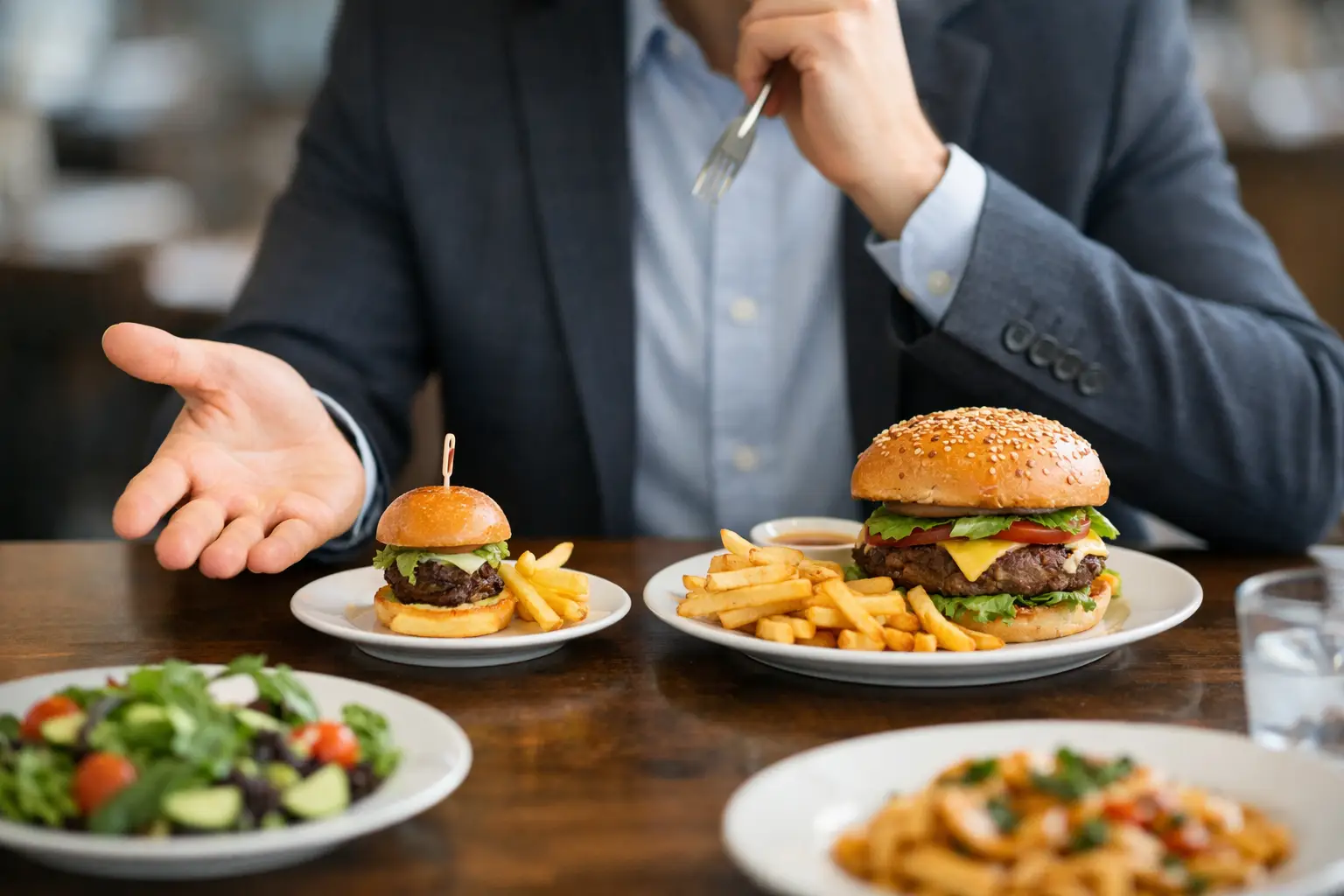
A menu can tell you that a pasta dish is “hearty,” a salad is “shareable,” or a dessert is “generous.” But those words do not answer the question that matters when you are hungry and spending your money: How much food will actually arrive? The best ways to judge portion size combine practical menu-reading habits with something far more useful than a description alone – seeing the real dish before you order.
Portion size is not just a nutrition question. It affects your budget, your appetite, your ability to share, and whether you leave dinner feeling satisfied or disappointed. For people with visual impairments or decision fatigue, vague menu language can make that uncertainty even more frustrating. A clearer picture helps make ordering feel like a choice, not a gamble.
Start With the Dish Category, Not the Dish Name
A restaurant’s idea of a “bowl,” “plate,” or “entrée” varies widely. One grain bowl may be a light lunch; another may be large enough for two meals. Before deciding, look at the category the dish lives in and compare it with the rest of the menu.
A side of fries, for example, may be listed separately because it is meant to supplement a sandwich. If the same restaurant calls fries “loaded” or prices them close to an entrée, it may be a much larger portion. Likewise, an appetizer can be bigger than an entrée at a tapas-style restaurant, while an entrée at a fine-dining spot may be intentionally more restrained.
Price can offer a clue, but it is not a measuring cup. A higher price may reflect premium ingredients, preparation time, or location rather than more food. Use it as one signal, then look for others.
Read Menu Words as Portion Clues
Restaurants often reveal more than they realize through their wording. Phrases like “single,” “half,” “personal,” or “individual” usually suggest one serving, although that serving may still be substantial. “For the table,” “family-style,” “platter,” “sampler,” and “feeds two” are stronger clues that sharing is expected.
Pay attention to counts and weights when they appear. Three tacos, six wings, an eight-ounce steak, or a 12-inch pizza gives you a starting point. Still, numbers need context. Three street-style tacos are very different from three oversized tacos filled with rice, beans, meat, cheese, and toppings.
Descriptions also hint at how filling a dish may be. A meal with protein, starch, sauce, cheese, and fried components will often feel more substantial than one built around greens or broth. That does not mean one is better than the other. It simply helps you order for the appetite you actually have.
Watch for vague words
“Large,” “small,” “light,” and “hearty” are subjective. A restaurant may call a 16-ounce soup “small” because it comes in a cup, while another serves a smaller bowl as a full meal. Treat these labels as invitations to look for details, not as dependable measurements.
Use Real Food Photos to Find Scale
A photo becomes truly helpful when it shows more than a close-up of melted cheese or a perfectly placed garnish. Look for visual reference points: the rim of the plate, a fork, a drink, a hand, a takeout container, or other dishes on the table. These details make it easier to estimate whether you are looking at a snack, a standard meal, or something built for sharing.
Multiple customer photos are even better. One polished image can be misleading because of camera angles, cropping, or styling. Several real photos show whether the dish is consistently piled high, whether the container is shallow, and whether the portion changes between dine-in and takeout.
Photos also answer questions menus often miss. Is the burger tall enough to require two hands? Are the noodles mostly vegetables or a generous mound of pasta? Does the “side salad” fill a small cup or arrive on a full plate? Those are practical details that affect whether an order feels worth it.
Pic-ture That!™ is built around this kind of menu transparency: real images that help diners see what they are choosing before money is spent. Clear dish photos can reduce uncertainty for anyone, while making restaurant decisions more accessible for people who need visual information to order confidently.
Compare the Portion to What You Already Know
Your own dining history is one of the best measuring tools. Think about meals you have finished comfortably, meals that became next-day leftovers, and meals that left you searching for a snack an hour later. Use those memories to set a personal baseline.
If a restaurant’s burrito looks similar in size to one you usually split, plan to split it. If a rice bowl appears to have the same volume as a meal that reliably gives you lunch tomorrow, factor leftovers into the decision. This is more accurate than following a generic rule because appetites, dietary needs, and meal timing differ.
It also helps to consider what else you are ordering. A shared appetizer, bread basket, drinks, or dessert can turn a normal entrée into too much food. On the other hand, if you are ordering one small item after a busy day, a larger portion may be exactly what you want.
Judge the Container, Not Just the Food
Takeout containers can create a false impression. Food packed tightly into a small container may be more filling than a loosely arranged dish on a large plate. A wide bowl can look sparse in a photo even when it holds a satisfying amount, while a tall cup can hide a surprisingly small serving.
When you see a photo, notice how much of the container the food occupies. Is the box filled to the edges? Does the dish cover the plate or sit in the center with lots of empty space? Is there a second container for sauce, sides, or toppings? These clues tell a more complete story than the camera angle alone.
For items such as fries, wings, dumplings, and chips, count what you can see. For soups, smoothies, and grain bowls, compare the vessel to a familiar coffee cup, cereal bowl, or meal-prep container. You are not trying to estimate every ounce. You are trying to avoid an unpleasant surprise.
Ask the Restaurant One Specific Question
If the menu and photos still leave you unsure, ask a short, direct question before ordering. “Is this enough for one hungry person?” or “Would you say this side is shareable?” is more likely to get a useful answer than “How big is it?”
For delivery, a quick call can be worthwhile when the order is expensive, when you are feeding multiple people, or when you have a dietary need that makes a disappointing meal especially difficult. Staff may not know exact measurements, but they often know which dishes customers commonly share and which ones generate leftovers.
If you are dining with friends, asking at the table can work too. Servers regularly see portions leave the kitchen and may point you toward the better fit. Just remember that “enough” depends on the person. Give context when you can: one person, two people, light lunch, or full dinner.
Plan for Satisfaction, Not Perfection
There is no single correct portion size. A big serving may be a great value when you want leftovers. A smaller plate may be right when you want to try several dishes, save room for dessert, or avoid carrying food around afterward. The goal is not to order the most food. It is to order with fewer surprises.
Before you tap checkout, take ten seconds to match the dish to the moment. Are you eating now, sharing, saving some for later, or building a meal from several small plates? Pair that answer with menu details and real photos, and you will make a far more confident call.
The next time a menu uses a word like “generous,” let the image, the container, and your own experience define what generous means for you.
Leave a Reply