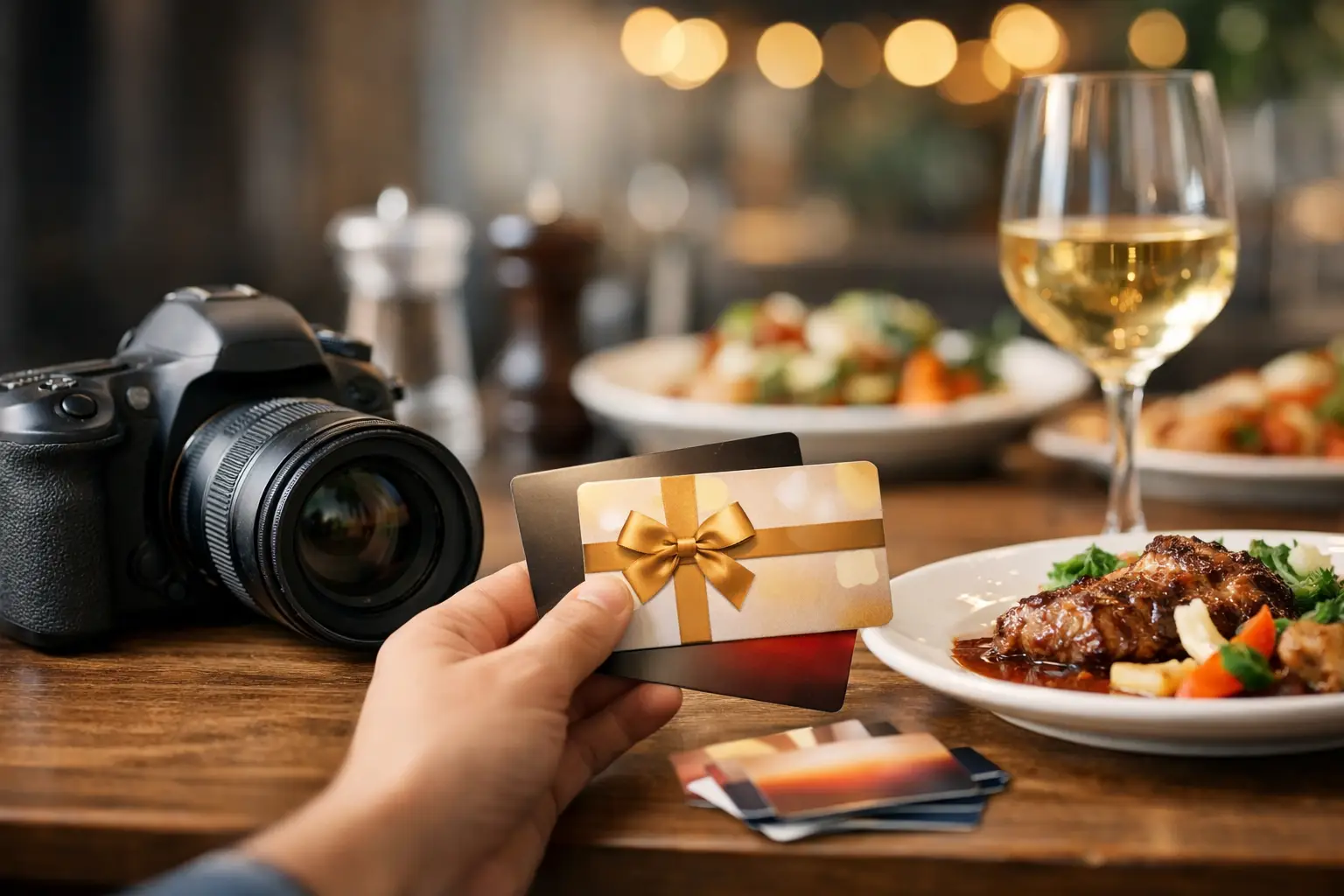
You already take a photo when the food hits the table. The difference is that now that habit can do something useful. If you want to get gift cards for restaurant photos, the best approach is not posting random food shots – it is sharing clear, honest images that help other people decide what to order before they spend money.
That matters more than it sounds. Restaurant menus are still packed with vague descriptions, flattering marketing language, and not nearly enough visual context. For plenty of diners, that is annoying. For people with visual impairments, sensory preferences, dietary concerns, or decision fatigue, it can be a real barrier. A good restaurant photo is not just content. It is information.
Why people get gift cards for restaurant photos
The basic idea is simple. Restaurants and food discovery platforms need real images of actual menu items. Users need a better way to see what a dish looks like before ordering. When diners contribute those photos, everyone gets something valuable out of the exchange.
You get rewarded for something you are already doing. Other diners get more confidence and less guesswork. And the platform builds a more honest, more accessible view of restaurant food than a text-only menu ever could.
That last point is worth pausing on. A polished marketing image can be useful, but it does not always reflect what shows up at your table. User-submitted restaurant photos help close that gap. They show portion size, plating, sides, toppings, texture, and presentation in a way descriptions rarely can.
What kind of photos actually earn rewards
Not every food picture is equally helpful. If a platform lets users get gift cards for restaurant photos, it is usually rewarding photos that improve decision-making, not just photos that look trendy on social media.
The most useful images are straightforward. They show the whole dish clearly, with enough lighting and framing for someone to understand what they are ordering. You do not need studio quality. You do need accuracy.
A strong restaurant photo usually does a few things well. It shows the item from an angle that makes the size and ingredients easy to understand. It avoids heavy filters that change the color or texture of the food. It captures what was actually served, not a staged bite after half the plate is gone. And it is attached to the right menu item so other users can trust what they are seeing.
There is a trade-off here. Perfectly styled photos may look great, but overly edited images can make a dish less useful to someone deciding whether to buy it. On the other hand, a dark, blurry photo may be authentic but still fail to help anyone. The sweet spot is simple: real, visible, and accurate.
How to get gift cards for restaurant photos without wasting effort
If your goal is to earn rewards, consistency matters more than luck. The easiest way to miss out is to upload images that are hard to use, incomplete, or disconnected from the actual menu item.
Start before you eat. Once the plate arrives, take a quick second to capture the dish while it still looks complete. Use natural lighting if you can, and keep the frame clean. You do not need a ring light at brunch. Usually, moving the plate closer to a window or avoiding harsh overhead glare is enough.
Take one photo that shows the full dish and, if needed, a second angle that helps explain it better. That extra image can be especially helpful for stacked sandwiches, bowls with layers, or meals where sides and add-ons matter. If the menu item includes options like sauce choice or protein swap, make sure the image reflects what was actually ordered.
Accuracy is where many people fall off. A beautiful photo loses value fast if it is uploaded under the wrong item name. Double-check the dish title, and if the platform allows notes, use them to add context that helps others understand what they are seeing.
You should also think beyond aesthetics. Ask yourself one practical question: would this photo help someone decide yes or no? If the answer is yes, you are probably contributing something worth rewarding.
The best restaurant photos are useful, not flashy
Social media trained a lot of people to chase dramatic angles, moody lighting, and heavy edits. That style has its place, but reward-based restaurant photo platforms usually need something different.
They need trust.
When someone is deciding whether a pasta dish looks too saucy, whether a burger seems large enough for the price, or whether a dessert is actually what the menu description suggests, they are not looking for artistic mystery. They want a clear answer.
That is why the most effective contributors tend to keep things simple. Their photos are bright enough to read. The framing is steady. The food is centered. Nothing important is cropped out. They are documenting the meal, not turning it into a lifestyle shoot.
This is also where accessibility comes in. Clear visual information reduces friction. It helps people compare options faster and with less stress. It gives more independence to users who rely on images to make informed ordering decisions. That is a much bigger value than collecting likes.
Where this model makes the biggest difference
Some restaurant categories benefit from user photos more than others. Build-your-own meals are a great example because the final dish can vary a lot from the menu description. Combo meals, sushi rolls, regional dishes, desserts, and seasonal specials also tend to benefit from real customer images.
Chain restaurants matter too, but not only for the reason people assume. Yes, chains have wide reach. But they also rely heavily on standardized menu descriptions that can feel detached from what arrives at the table. Real photos add context, especially when portions or presentation differ by location.
Local spots may benefit even more. Independent restaurants often have limited photography resources, and some have no visual menu support at all. In those cases, a single accurate user photo can make a dish far more approachable for future customers.
Why reward programs are more than a nice perk
Gift cards are a strong incentive, but they are not just about paying users to upload pictures. They help create a participation loop that can improve menu transparency at scale.
The better the rewards, the more likely people are to contribute regularly. The more they contribute, the stronger the photo library becomes. The stronger the library becomes, the easier it is for other diners to order with confidence. That means less disappointment, fewer surprise meals, and a better dining experience overall.
It also creates a more community-driven alternative to polished restaurant advertising. Instead of relying only on brand-approved visuals, diners get to see what food looks like in real life, from real people, across more menu items.
That is part of what makes this model feel timely. People are tired of guessing. They want proof, not just promises.
A few mistakes that can cost you rewards
If you want to get gift cards for restaurant photos consistently, avoid the habits that make submissions less useful. The big ones are blur, poor lighting, extreme editing, missing item names, and photos taken after the dish has been significantly altered.
Another common issue is submitting images that focus more on the table setting than the food. The cocktail, candle, and corner booth might look great, but if the dish is tiny in the frame, it does not help much.
It is also smart to avoid assumptions. If you are not sure what variation of the dish you received, confirm before uploading. Accuracy builds trust, and trust is the whole point.
What makes this worth doing
The obvious answer is the reward. Restaurant gift cards are useful, flexible, and easy to appreciate if you already eat out or order in. But for many contributors, that is only part of the appeal.
There is also a sense of helping the next person make a better call. Maybe they are trying a new place and do not want to waste money. Maybe they have accessibility needs that make visual information essential. Maybe they are just tired of ordering based on a description that could mean almost anything.
Contributing restaurant photos gives those people something concrete to work with. It turns a personal moment – your meal – into shared guidance.
That is why this kind of platform can feel bigger than a standard rewards app. It is not only about earning something back. It is about making restaurant ordering more transparent, more inclusive, and less frustrating for everyone.
If you are already the person who snaps a quick pic before the first bite, you may be sitting on a surprisingly useful habit. With the right platform, that one photo can help someone order with confidence – and put your next gift card a little closer too.
Leave a Reply