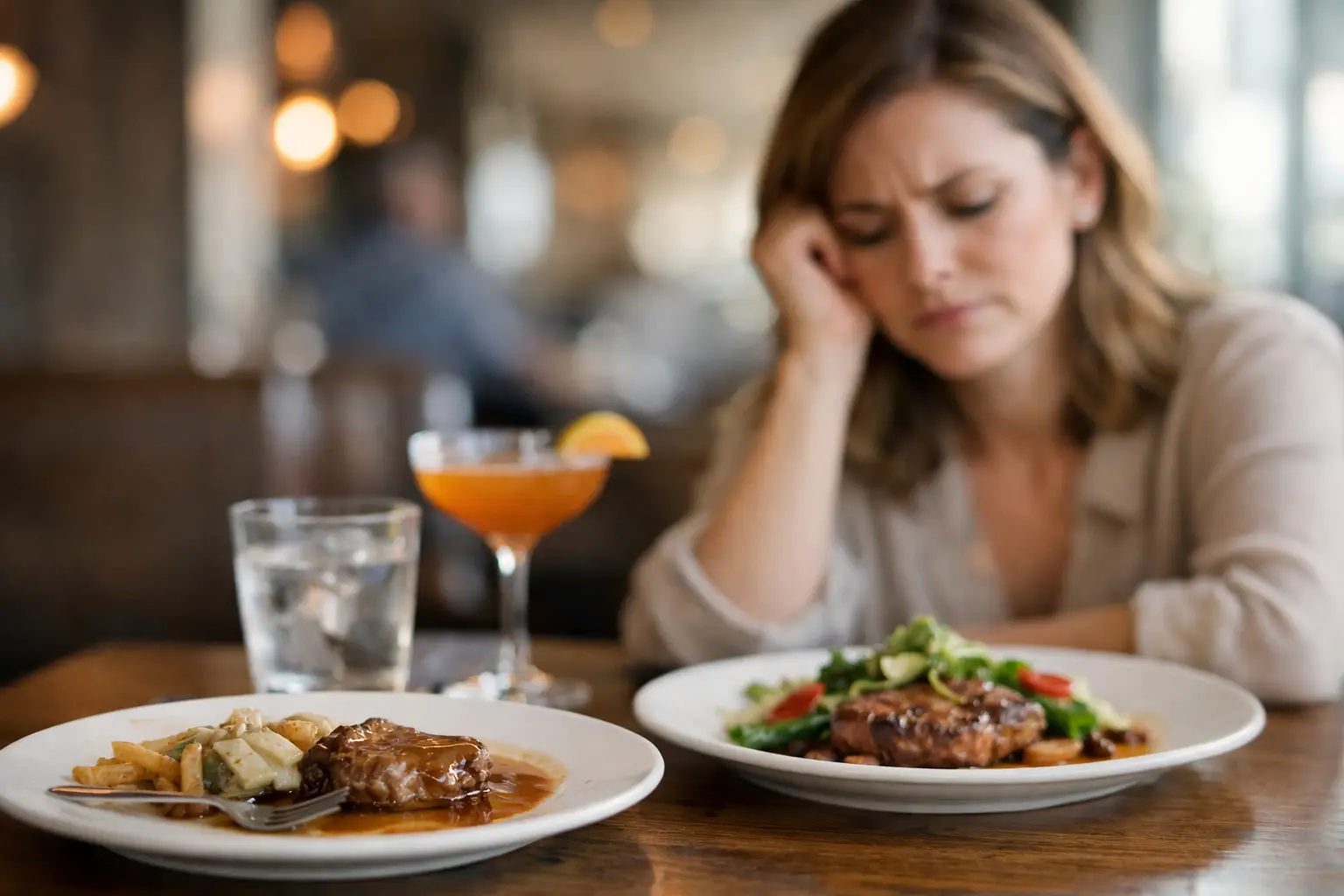
You know the feeling. The menu sounded great, the price wasn’t small, and then the plate shows up looking nothing like what you pictured. Maybe it’s smaller than expected, buried in sauce, missing the texture you wanted, or loaded with ingredients the description barely mentioned. If you’ve ever searched for how to avoid disappointing restaurant orders, the fix usually starts before you tap checkout or flag down your server.
Restaurant disappointment is rarely about being “too picky.” Most of the time, it comes from a basic information gap. Menus rely on short descriptions, and short descriptions leave a lot out. That gap matters for everyone, but especially for people who are making fast choices on their phone, managing dietary needs, dealing with decision fatigue, or navigating a visual impairment. Better ordering starts with better visibility.
Why restaurant orders go wrong so often
A menu description can only do so much. Words like crispy, house-made, spicy, or signature sound helpful, but they don’t tell you the portion size, the plating, the actual color, or whether the dish leans creamy, oily, dry, or overloaded. Even ingredient lists can be incomplete in practice. A sandwich might arrive stacked twice as high as expected. A salad might be mostly lettuce with a tiny scoop of protein. A pasta described as garlic-forward might actually taste sweet.
There’s also the photo problem. Many restaurants either don’t show images at all or use polished marketing shots that don’t reflect what ends up in a takeout box on a busy Friday night. That makes ordering feel like a gamble when it should feel informed.
And then there’s context. A dish that works beautifully in the dining room may not survive delivery. Fries get soft. Sauces separate. Crunch disappears. If you’re ordering off a text-only menu, you’re being asked to imagine both the dish and how it travels. That’s a lot of guesswork for something you’re paying real money for.
How to avoid disappointing restaurant orders before you buy
The best approach is simple: slow down just enough to replace assumptions with evidence. That doesn’t mean turning every meal into a research project. It means knowing what to check so you can order with more confidence.
Start with the visual, not just the description. If you can see a real photo of the dish, you immediately learn things the menu didn’t tell you. You can spot portion size, topping balance, side items, sauce levels, bun-to-filling ratio, and whether the dish actually looks appealing to you. For many people, that one step prevents the biggest ordering mistakes.
Authentic photos matter more than polished ones. A studio-perfect burger can look amazing and still tell you nothing about what arrives from your local location. Community-shared food photos are often more useful because they show the dish as people actually receive it. That kind of transparency helps you decide whether the item matches your expectations, appetite, and budget.
If there isn’t a reliable image available, read menu language carefully. Look for specifics, not hype. “Blackened chicken with roasted corn salsa and chipotle crema” gives you much more to work with than “chef’s favorite chicken bowl.” The more concrete the description, the lower the risk. Vague items can still be good, but they require more trust.
Use a quick decision filter
When you’re hungry, rushed, or overwhelmed by choices, it helps to have a short mental checklist. Before ordering, ask yourself four things: Do I know what this actually looks like? Do I understand the portion and ingredients? Will this travel well if it’s takeout or delivery? Does the price feel fair for what I’m likely to get?
If the answer is no to two or more of those, that’s usually a sign to keep looking. This small pause can save you from the very common trap of ordering the best-sounding item instead of the best-fit item.
This matters even more for decision fatigue. Too many menu options can push people into random choices, not confident ones. A visual-first approach narrows the field faster and makes the process less draining. Instead of comparing twenty descriptions, you can react to what actually looks good, practical, and worth your money.
Pay attention to dishes that often disappoint
Some foods are naturally riskier than others. Fried items are high-risk for delivery because texture drops fast. Layered dishes like nachos can arrive soggy or unevenly built. Trendy “loaded” menu items often photograph better than they eat, especially when toppings overwhelm the base. Large mixed plates can also be misleading because descriptions make everything sound balanced, while the real dish may heavily favor one component.
Build-your-own meals can go either way. They offer control, which is great, but they also create more room for mismatch if the portions aren’t clear. If you’re paying extra for add-ons, a real image helps you see whether those upgrades actually change the meal in a meaningful way.
Daily specials and seasonal items can be worth trying, but they come with less predictability. If you’re in the mood to experiment, great. If you’re trying to avoid disappointment, your safest choice is often a dish with enough visual proof or customer familiarity behind it.
How to avoid disappointing restaurant orders when ordering online
Online ordering adds convenience and removes context at the same time. You can’t glance around the room to see what other people received, and you can’t easily ask follow-up questions unless the platform supports it well. That makes visuals even more important.
When ordering online, compare the menu wording with any available images and reviews. If all the photos show a dish looking drastically different from the official listing, take that seriously. Consistency is a good sign. If one person’s bowl is packed and another’s looks half-full, the item may be less dependable than it seems.
Think about timing too. Some dishes are great at noon and disappointing at 9 p.m. after a long wait and a delivery ride. Foods that hold heat, structure, and moisture tend to travel better. Rice bowls, pasta with stable sauces, wraps, and many baked dishes often outperform anything that depends on crunch.
Customization can reduce risk, but only if you use it strategically. Removing one ingredient you know you dislike is smart. Rebuilding the entire dish from scratch often creates something the kitchen didn’t design to taste balanced. There’s a trade-off between personalization and predictability.
Accessibility is part of better ordering
Transparent ordering is not a luxury feature. It’s part of making dining more equitable. For people with visual impairments, text-only menus can create a major barrier to independent choice. For people with decision fatigue, vague menus turn a basic task into a stressful one. For anyone watching their budget, uncertainty can mean wasting money on meals that miss the mark.
That’s why real food imagery matters beyond aesthetics. It supports confidence, autonomy, and clearer expectations. Seeing what you’re ordering should be normal, not rare.
This is also where community can make a real difference. When diners share authentic photos of what they received, they help the next person order with more clarity. That creates a more inclusive restaurant experience for everyone. Pic-ture That!™ is built around exactly that idea – helping people see real dishes before they order, so fewer meals end in regret and more choices feel informed.
Build better ordering habits over time
The goal isn’t to eliminate every bad order forever. Restaurants vary, kitchens get busy, and personal taste is still personal taste. But a few habits can shift the odds strongly in your favor.
Notice which places are consistent with portions and presentation. Notice which menu descriptions tend to oversell. Save the dishes that worked, not just the restaurants that worked. A great restaurant can still have one weak item, and an average-looking menu can still hide a standout dish. Precision helps.
It also helps to be honest about what usually disappoints you. If you regularly regret ordering novelty items, stop treating them as your default. If texture matters more to you than flavor experimentation, prioritize dishes you know will hold up. The smartest order is not always the most exciting one. Sometimes it’s the one that matches the experience you actually want.
The best restaurant order is the one that feels clear before it arrives. When you can see the food, understand what you’re paying for, and choose based on real information instead of hopeful imagination, ordering gets easier, more accessible, and a lot more satisfying.
Leave a Reply