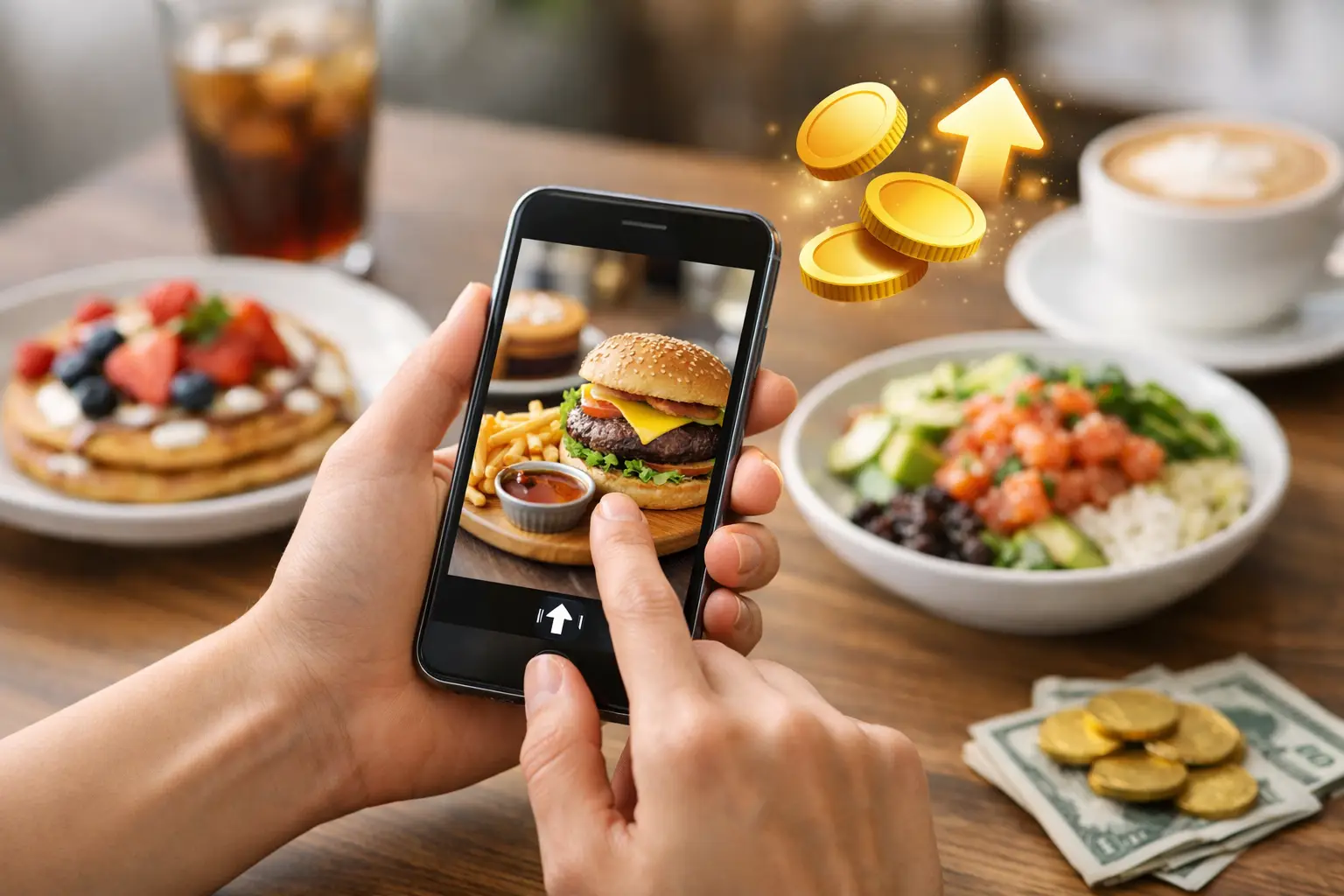
You already take a photo before the first bite when a dish looks especially good – or especially confusing. The difference is that now, those photos can do more than sit in your camera roll. You can earn rewards uploading food photos while helping other people see what a menu item actually looks like before they spend money on it.
That matters more than it sounds. A menu description can be vague, outdated, or just plain optimistic. “Crispy chicken bowl” does not tell you portion size, sauce coverage, plating, or whether the ingredients look fresh. Real food photos fill in that gap. They make ordering easier, more accessible, and a lot less frustrating for people who want clarity before they commit.
Why earn rewards uploading food photos matters
Most restaurant ordering still depends on text. That works fine until it doesn’t. If you have decision fatigue, dietary concerns, low vision, or simply no patience for guessing games, text-only menus can turn a quick meal into a chore.
Real user photos change that. They show what arrives at the table, not what was promised in a polished promo shot three years ago. That kind of transparency helps people order with more confidence. It also helps restaurants set better expectations, which can mean fewer disappointed customers and fewer abandoned carts.
When users earn rewards for contributing those photos, everyone benefits. Diners get visibility. Contributors get something tangible back. And the platform grows into a more useful, more inclusive tool for the next person trying to decide between two dishes that sound nearly identical on paper.
What kinds of rewards can you earn?
If you want to earn rewards uploading food photos, the exact reward depends on the platform. In many cases, users can receive points, app credits, contest entries, or restaurant gift cards. The strongest reward systems are simple: upload useful photos, meet the quality standards, and earn based on approved contributions.
That last part matters. Not every photo will qualify, and that is a good thing. If a platform is serious about helping diners make informed choices, it needs images that are clear, accurate, and actually helpful. A blurry shot taken in near darkness may be authentic, but it may not be usable.
This is where the mission matters. On a platform built around visual menu transparency, rewards are not just a gimmick. They are a way to recognize the time and effort users put into making restaurant choices easier for everyone else.
How to earn rewards uploading food photos successfully
The easiest way to earn rewards uploading food photos is to think like the next diner. What would help someone decide whether this dish is worth ordering? That mindset leads to better uploads than chasing “foodie” perfection.
Start with accuracy. Take a photo of the meal as it was served, before you move things around too much. Natural lighting helps, but the real goal is clarity. People want to see portion size, toppings, sides, color, texture, and presentation. They are not looking for a dramatic restaurant ad. They are looking for an honest preview.
Framing matters too. Try to capture the full plate or container. If the dish has important details – like dressing on the side, spice labels, or a surprising ingredient – a second angle can make the upload far more useful. Keep the background simple when you can, but do not stress about perfection. Helpful beats polished.
It also helps to upload promptly. A photo tied to the correct restaurant and menu item is far more valuable when details are still fresh in your mind. If a platform asks for dish names, modifications, or notes, fill them in carefully. A great image with sloppy labeling creates confusion instead of clarity.
What makes a food photo actually useful
A useful food photo answers questions fast. Is the sandwich huge or snack-sized? Does the pasta come swimming in sauce or barely coated? Are the fries seasoned? Is the “loaded” baked potato actually loaded?
That is why authenticity matters more than styling. A real diner wants to know what is likely to show up on their own table. Photos that are too filtered, too cropped, or too staged can hide the exact details users came to see.
There is also an accessibility angle here that often gets overlooked. For users with visual impairments, clear and consistent images can support better menu navigation when paired with strong labeling and app structure. For users with decision fatigue, visuals reduce the mental load of comparing options described in nearly identical language. Seeing the meal can shorten the path to a confident choice.
The trade-off between speed and quality
If you are trying to contribute often, you may feel pressure to upload quickly and move on. That can work, but quality still needs to be high enough to help someone else. There is a balance.
You do not need professional equipment. A phone photo is enough. But you do need focus, decent lighting, and a clear subject. Fast uploads are great when they stay readable. If your shot is too dark to show what the food looks like, it probably will not help you earn much or help other users at all.
The same goes for volume. More uploads can mean more rewards, but only if the platform values approved, relevant contributions over raw quantity. A smaller number of strong photos will usually do more for your results than dumping a batch of unusable ones.
How community-powered food photos build something bigger
This is bigger than earning a gift card here and there. Every useful upload helps create a more transparent food ordering experience. Over time, that builds a visual menu library shaped by real people, not just restaurant marketing teams.
That kind of community data is especially powerful in restaurants that have little or no visual information available online. A local spot may have excellent food and almost no accurate images of its current menu. User uploads can close that gap quickly.
That is part of what makes this model exciting. Instead of waiting for restaurants to update their own listings, everyday diners can help build a practical resource together. Pic-ture That!™ is built around exactly that idea – real food photos that help people order with more confidence while giving contributors a reason to keep participating.
Tips to improve your chances of earning more rewards
A few habits can make a big difference. Check that the dish name matches the item you ordered. Avoid heavy editing. Keep the food centered and visible. If the portion size is a major selling point, include a little table context so scale is easier to judge.
It is also smart to focus on menu items that are underrepresented. If a platform already has ten clear photos of the same burger, your eleventh may be less valuable than a good image of a salad, dessert, or seasonal special with no coverage yet. Some systems may reward scarcity or usefulness more than repetition.
Consistency helps too. Regular contributors often learn what gets approved and what gets skipped. Once you understand the platform’s standards, earning becomes less random and more predictable.
Who benefits most from this model?
Plenty of people can benefit, but a few groups stand out. Frequent takeout customers get a better sense of what they are paying for. People trying unfamiliar restaurants can reduce the risk of disappointment. Users with visual impairments get more image-based support in a space that often relies too heavily on text. And people who get overwhelmed by long menus can narrow choices faster when real photos are available.
There is also something satisfying about contributing to a system that makes dining more inclusive. You are not just posting food pics for likes. You are helping someone else make a more informed, less stressful decision.
That is what makes the reward feel earned. The photo is not valuable because it is pretty. It is valuable because it is useful.
Is it worth it?
It depends on what you want. If you are looking for a full-time income, no. Uploading meal photos is not a replacement for a job. But if you already eat out, already take photos, and like the idea of getting rewarded for something you are doing anyway, it can absolutely be worth it.
The bigger payoff is practical. You help build a more honest picture of what restaurants actually serve. You support accessibility. You make ordering less of a gamble. And yes, you can earn rewards uploading food photos while doing it.
Next time your meal hits the table, take the extra few seconds to capture it clearly. Someone else may order with more confidence because you did.
Leave a Reply