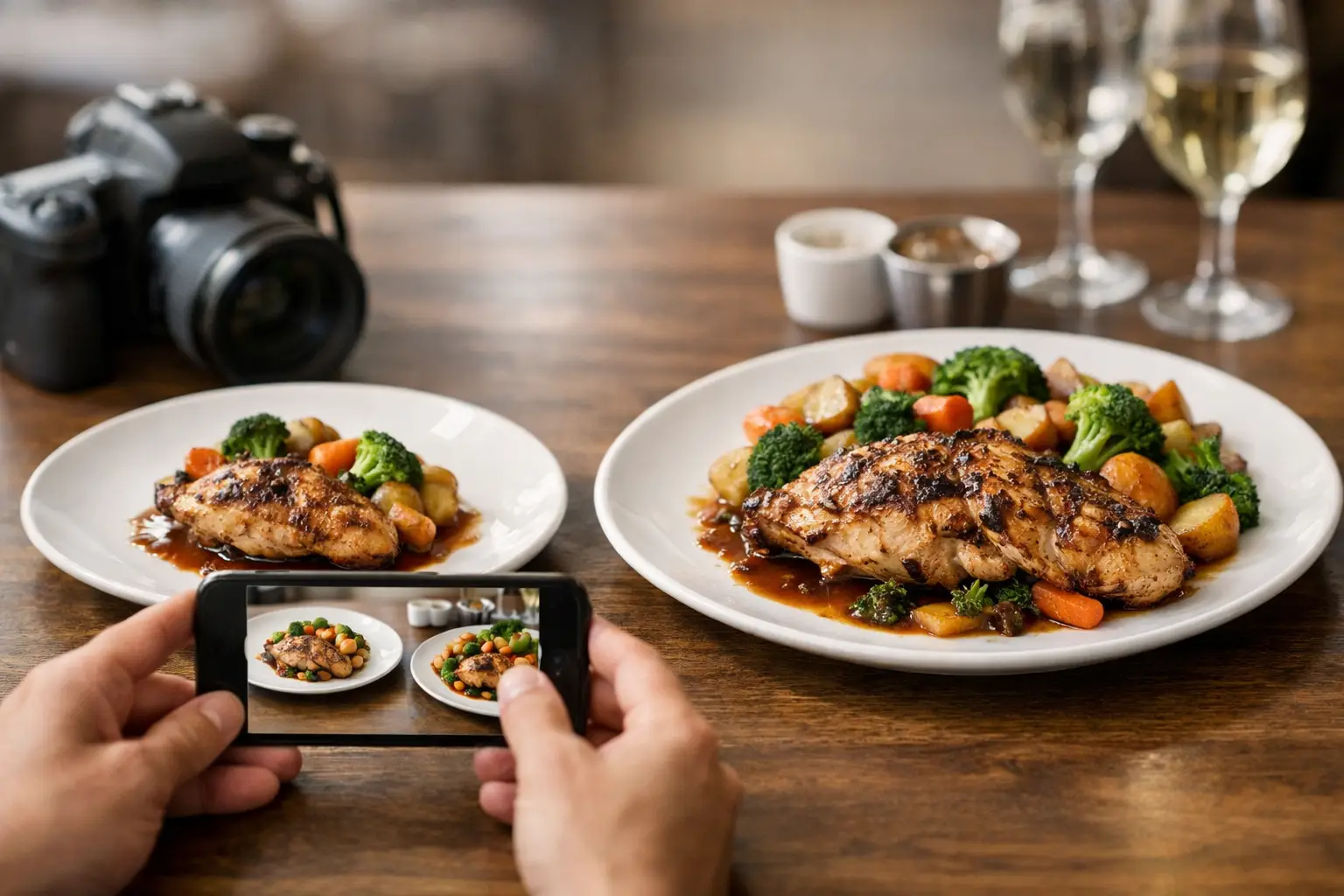
A menu says “three tacos,” but that could mean a filling dinner, a light snack, or three tiny bites that leave you ordering fries afterward. That gap between a description and the plate is exactly why restaurant portion size photos matter. Diners should not have to guess whether a $19 entrée will satisfy their appetite, fit their dietary needs, or feel worth the price.
Food photos are often treated as marketing. They are much more useful when they answer practical questions before someone spends money: How much food is there? What does the side dish look like? Is the bowl mostly rice, greens, or protein? Is that “shareable” appetizer genuinely big enough for two people?
Clear, authentic images make dining feel less like a gamble. They give people more confidence to try new restaurants, choose meals that work for them, and skip the disappointment of an order that looked nothing like they expected.
Restaurant Portion Size Photos Turn Guesswork Into Choice
Text-only menus carry a surprising amount of uncertainty. Words such as “generous,” “large,” “mini,” and “family-style” are subjective. One restaurant’s hearty serving may be another restaurant’s starter. Even ounces do not always help a diner picture a meal, especially when they are comparing unfamiliar dishes on a small phone screen.
A real photo adds context that numbers and descriptions cannot provide on their own. It shows the relationship between the entrée and its sides, the depth of a bowl, the thickness of a sandwich, and whether a dessert is a single bite or something best shared. When images come from real diners rather than a styled studio shoot, they can also show how a dish actually arrives at the table.
That information helps people make choices that feel intentional. Someone who wants leftovers can spot a larger serving. Someone looking for a lighter lunch can avoid accidentally ordering a plate built for a bigger appetite. A group can judge whether an appetizer is worth splitting. The decision is still personal, but it is based on something visible rather than vague menu language.
Portion size affects value, not just appetite
Price alone does not tell diners whether a dish offers good value. A $16 pasta bowl may be a great deal if it is filling, made with quality ingredients, and likely to provide lunch tomorrow. The same price can feel frustrating if the portion is smaller than expected or if the dish arrives with a side that was not clearly described.
Restaurant portion size photos give diners a better way to evaluate that value before checkout. This is especially helpful with delivery, where it is harder to ask a server a follow-up question and harder to fix a disappointing choice once the bag arrives.
Photos also reduce food waste. Ordering too much because a menu made a portion sound small can lead to untouched leftovers. Ordering too little can mean placing a second order, buying extra snacks, or feeling unsatisfied after paying for a meal. Better visual information supports better-fit orders.
What Makes a Portion Photo Actually Useful?
Not every food image helps. A dramatic close-up of melting cheese may look great, but it does not always reveal scale. The most useful photos balance appetizing detail with an honest view of the full dish.
A strong portion photo usually shows the complete plate, bowl, box, or tray. A visible fork, cup, napkin, or hand can provide natural scale without turning the image into a measurement chart. Multiple angles can help when a dish is stacked, deep, or served in a container that hides its volume.
Lighting matters, but accuracy matters more. Heavy filters, extreme cropping, and promotional styling can make a dish look different from what diners receive. A photo does not need to be professionally staged to be valuable. It needs to be clear, current, and representative of a real order.
Context is useful, too. If a photo shows a burger next to fries, diners can see whether the fries are included and how substantial the full meal looks. If a salad comes in a deep bowl, an overhead shot can reveal whether it is packed with ingredients or mostly leafy greens. If a menu item changes with a lunch special, seasonal ingredient, or new packaging, newer photos should take priority.
No image can promise an identical plate every time. Portions can vary slightly by location, kitchen staff, ingredient availability, and whether an order is dine-in, takeout, or delivery. That is not a reason to avoid photos. It is a reason to treat them as practical guidance, not a guarantee measured to the last french fry.
Better Food Images Support More Accessible Dining
For many diners, menu decisions take more energy than restaurants realize. Long lists of unfamiliar dishes, unclear descriptions, and pressure to decide quickly can create real decision fatigue. Seeing a meal makes comparison faster and more concrete. A diner can move from “What does this mean?” to “That looks like the kind of meal I want.”
Visual menus can also support people with different access needs, including diners with low vision who may use magnification or benefit from high-contrast, well-organized imagery. Still, photos alone are not a complete accessibility solution. Images should be paired with useful text descriptions, readable labels, and layouts that work with screen readers and keyboard navigation. A photo without context can exclude just as easily as a text-only menu can.
The goal is not to replace menu descriptions. It is to give diners more than one way to understand what they are ordering. Ingredient details, allergen information, prices, and written descriptions remain essential. Photos add the missing visual layer.
That layer can be especially empowering for people trying a cuisine they have not ordered before. A name on a menu may not explain whether a dish is soupy, crispy, spicy-looking, wrapped, grilled, or served over rice. Seeing it can lower the barrier to trying something new.
Authentic Photos Build More Trust Than Perfect Ones
Restaurant marketing photography has a role, but diners increasingly look for proof from real experiences. They want to know what the food looked like after it traveled across town, what a standard portion looked like on a busy Friday night, and whether the meal matched the menu’s promise.
Community-contributed photos can fill that gap when they are organized carefully. A useful library should connect images to the correct restaurant location and menu item, make dates visible when possible, and leave room for several diners’ perspectives. One photo may show a dish plated in the restaurant. Another may show its takeout container. Together, they create a more realistic picture.
This community approach also expands coverage beyond the most photogenic dishes. The meal someone is most curious about may be the kids’ entrée, the side of mac and cheese, the vegetarian bowl, or the dessert with an unclear serving size. Every accurate contribution can help the next person order with more confidence.
That is the idea behind Pic-ture That!™: helping people see real restaurant meals before ordering while inviting diners to contribute photos that make the experience clearer for everyone. When people share what actually arrived, they help build a more transparent dining culture – and can earn rewards for doing it.
How Diners Can Read Portion Photos Wisely
A smart visual decision starts with looking at the whole frame. Notice the plate or container, the number of pieces, the sides, and any familiar object that gives scale. Then compare more than one photo when possible. If three recent images show a similar serving, that is more helpful than relying on one perfectly angled shot.
It also helps to match the photo to your ordering situation. A dish that looks substantial at a table may arrive differently for delivery. A combo meal may be photographed with add-ons that are not included. If the image and menu description conflict, read the item details closely and treat the text as the final word on what is included.
Most of all, use photos to ask better questions of your own appetite and priorities. Do you want comfort food with leftovers? A quick meal that will not slow down your afternoon? Something easy to share? The best order is not always the biggest one. It is the one you can see clearly enough to choose for yourself.
The next time a menu leaves you wondering what will actually show up, look for the real plate, not just the polished promise. A clearer picture can make a small decision feel a lot more satisfying.
Leave a Reply