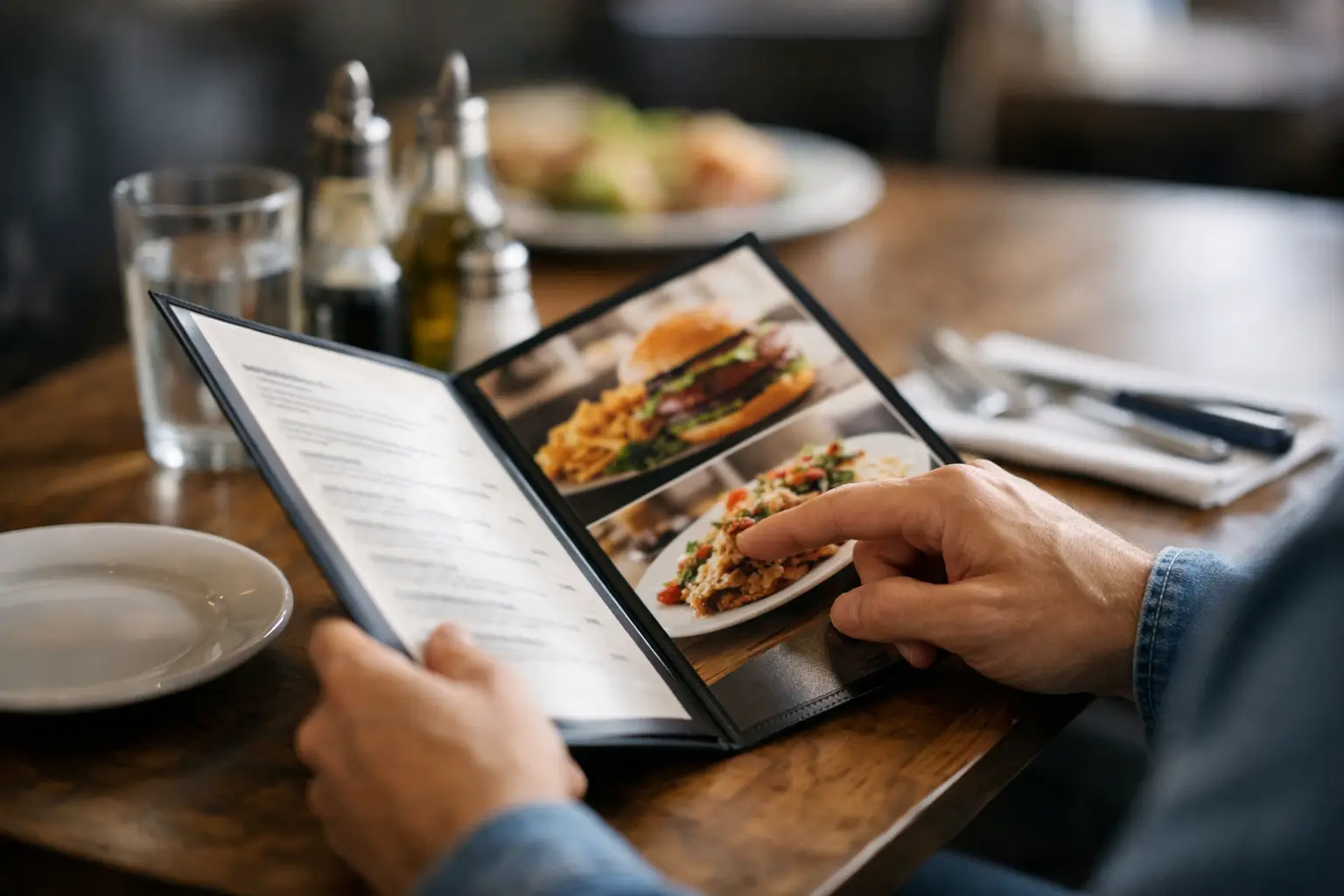
A menu says a pasta is “creamy,” a bowl is “loaded,” or a sandwich comes with “house-made sauce.” Then your order arrives looking nothing like the meal you pictured. Learning how to spot misleading menus is not about assuming restaurants are trying to trick you. It is about recognizing when a description leaves out the details that matter to your budget, appetite, dietary needs, and overall experience.
For many diners, uncertainty is more than a minor inconvenience. Text-only menus can make it harder to choose confidently, especially when you are ordering quickly, managing food sensitivities, using a screen reader, or simply feeling overwhelmed by too many options. Clear information should not be a luxury.
How to spot misleading menus before you spend
The biggest warning sign is a menu that creates a vivid impression without giving you useful specifics. Descriptive language can be appetizing, but words like “generous,” “signature,” “classic,” and “premium” do not tell you portion size, ingredients, preparation style, or what is actually included.
Take “grilled chicken bowl with seasonal vegetables.” Is it a filling grain bowl, a small salad, or mostly lettuce with a few pieces of chicken? Does it include rice? Is dressing included? Does “seasonal vegetables” mean roasted squash, raw greens, or whatever is available that day? A description can sound complete while leaving the decision-making details blank.
Look for menus that answer the practical questions: What is in it? How is it prepared? What comes with it? What costs extra? The more a menu relies on mood-setting language instead of concrete information, the more you may need to pause before ordering.
Watch for vague quantity words
“Loaded,” “stacked,” “oversized,” and “shareable” are not measurements. A restaurant may use them honestly, but every diner has seen a “loaded” nacho plate with toppings concentrated on the top layer and plain chips underneath.
Be especially careful with terms that imply value. “Sampler” may contain only small tastes. “Family meal” may feed two hungry adults but not a family of four. “Double” could mean double meat, double patties, or simply a larger bun. If portion size affects whether the meal is worth the price, look for an ounce count, number of pieces, side descriptions, or real customer photos.
Photos can help reveal scale, but only if they are authentic and reasonably current. A polished promotional image may show a fully styled version of a dish that is not representative of a standard takeout order. A collection of real diner photos can be more useful because it shows what people actually received.
Separate included items from add-ons
One of the most frustrating menu surprises happens at checkout. The item looked like it came with a side, topping, protein, or sauce, but those details were either buried in small print or presented as paid upgrades.
Read the line below the item name, not just the headline. Notice whether wording says “served with,” “choice of,” “includes,” or “add.” Those small differences matter. “Tacos with rice and beans” suggests a complete plate. “Tacos, rice, beans” might be three separately priced choices, depending on the menu layout.
Pay close attention to build-your-own meals. These menus can offer flexibility, but they can also make the base price look lower than the meal most people would actually order. A $12 bowl can become an $18 bowl once you add protein, avocado, queso, and a drink. There is nothing wrong with paid customization when it is clear. The problem is when the menu makes a finished meal look like the starting price covers more than it does.
Read descriptions for what they do not say
Misleading menu language is often less about false statements and more about strategic omissions. A dish may mention its most appealing ingredient while skipping the parts that might change your mind.
A “truffle mac and cheese” could have truffle oil rather than fresh truffle. “Lobster bisque” may contain a small amount of lobster flavoring rather than visible lobster meat. “Fresh fruit” can mean a few garnish pieces. None of these choices automatically make a dish bad. They simply mean the menu should help you understand what you are paying for.
The same goes for preparation words. “Crispy” might mean fried, baked, or air-fried. “Blackened” can refer to seasoning rather than spice level. “Plant-based” does not always mean vegan, and “gluten-friendly” is not the same as gluten-free or safe for someone with celiac disease. If a term affects your health, ethics, or comfort, ask directly rather than relying on a broad label.
Notice when the photo and description disagree
A visual mismatch is one of the clearest signals to investigate further. Maybe the image shows a side salad, but the description only lists the entrée. Maybe the photo shows shrimp even though the dish name says “seafood-style.” Maybe a burger photo has two patties while the written menu lists one.
When the image and text do not line up, treat the written description as the starting point and ask for clarification. Restaurants sometimes use photos across multiple menu items, and online ordering systems can accidentally attach the wrong image. But diners should not have to guess which part of the listing is accurate.
Also check whether the photo is showing a full meal, a suggested serving presentation, or an upgraded version. Garnishes, extra sauces, drinks, and sides can make an image look more complete than the item you are purchasing. Real photos from people who ordered the dish can add valuable context, including portion size, packaging, and consistency.
Look beyond the menu item price
A low menu price can be technically accurate and still create a misleading impression of the final cost. Delivery fees, service fees, small-order fees, required packaging charges, and automatic gratuity may only appear later in the ordering flow. That makes it hard to compare restaurants or decide whether a meal fits your budget.
Before you commit, take a moment to view the cart total. This matters most with delivery, group orders, and items that need several add-ons to feel complete. If an entrée does not come with a side, drink, or protein, compare the final configured price with other options rather than the first number you saw.
Menus can also hide value differences through sizing. A 16-ounce smoothie might cost only a dollar more than a 12-ounce one, while a “large” coffee may be much larger than you expect. If the menu does not show portions, pictures and quick questions can prevent a disappointing order.
Use questions as a confidence tool
Asking a restaurant for details is not being difficult. It is how you make an informed choice when the menu is unclear. A short question can save money, reduce food waste, and make dining feel more accessible.
Try asking, “What comes with this?” “Is the sauce on the side?” “How spicy is it in practice?” “Is this enough for one person?” or “Does the photo show the standard order?” These are easy questions for staff to answer, and the response can tell you a lot about how transparent the restaurant is.
If you have an allergy or a strict dietary requirement, go further. Ask about cross-contact, cooking oils, shared fryers, and substitutions. A menu icon is helpful, but it cannot replace a conversation about your specific need. Transparency means giving diners enough information to decide safely, not making promises a kitchen cannot guarantee.
Build your own menu reality check
The best way to avoid a disappointing order is to compare several signals instead of trusting one persuasive phrase or perfect photo. Look at the written description, the final cart price, ingredient details, and real images when available. If all four tell the same story, you can order with more confidence.
If they conflict, slow down. It may still be the right meal for you, but it deserves a question before you spend. This is particularly useful when trying a new restaurant, ordering a high-priced entrée, or choosing food for someone else with different needs.
At Pic-ture That!™, we believe seeing real meals before ordering helps make restaurant choices clearer, more inclusive, and less stressful. Every honest photo and useful detail can help another diner know what to expect.
Your order should feel like a choice, not a gamble. When a menu leaves you guessing, trust that instinct, ask what is missing, and choose the restaurant that gives you the clarity you deserve.
Leave a Reply