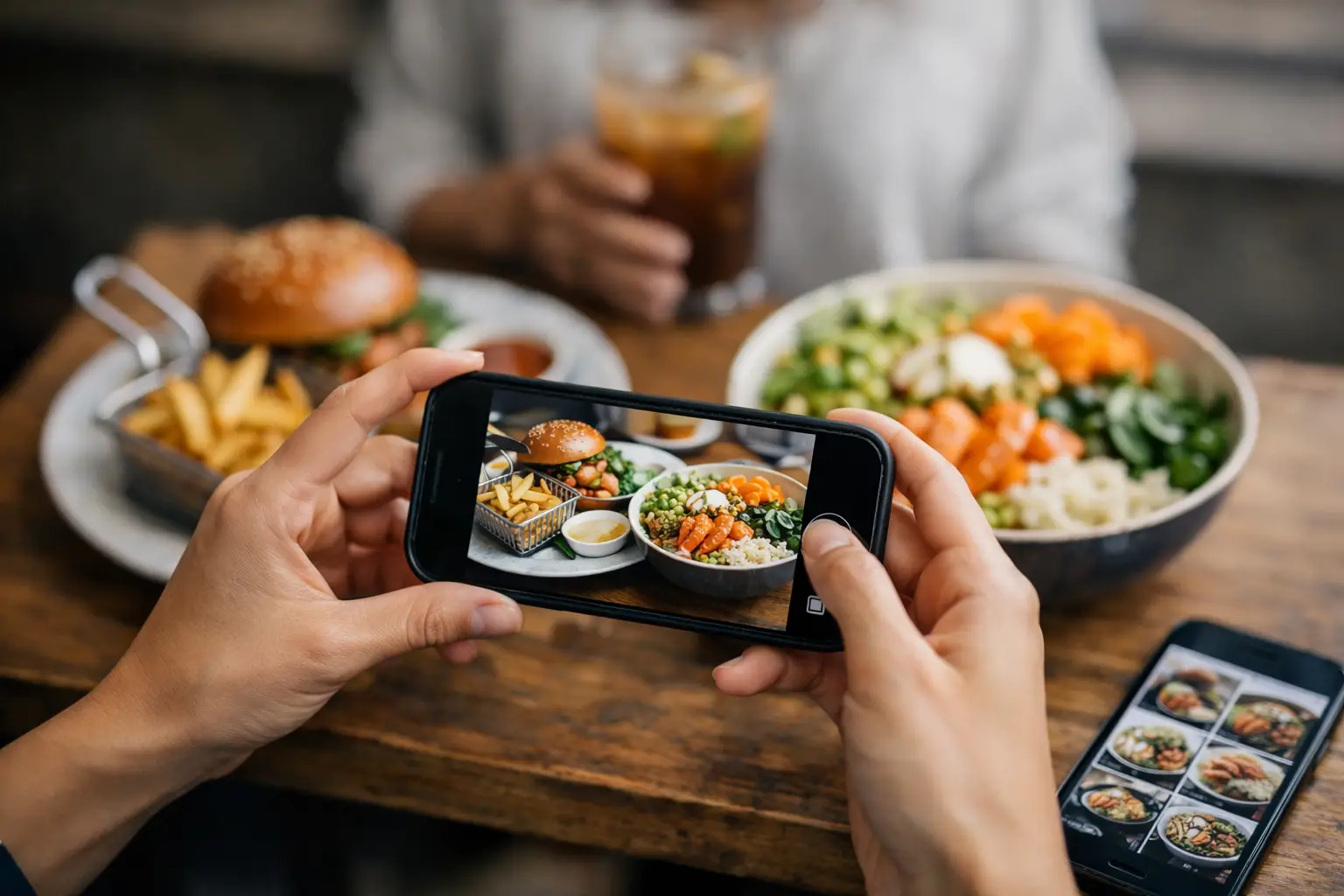
A menu can call something “crispy,” “loaded,” or “chef’s special” and still leave the biggest question unanswered: What will actually arrive at the table? A community food photo app fills that gap with real images from real diners, so people can make restaurant choices with more clarity, confidence, and control.
That matters when every order costs money, time, and trust. It matters when a vague menu creates decision fatigue. And it matters when visual information is the difference between feeling included in a dining decision and being left to guess.
Menus Describe Food. Photos Show the Decision.
Text menus are useful, but they are not always enough. “Grilled chicken with seasonal vegetables” might mean a generous, colorful plate at one restaurant and a small, plain entrée at another. A photo gives diners context that descriptions often miss: portion size, toppings, sides, sauces, presentation, and whether the dish looks like something they genuinely want to eat.
This is not about making every meal look picture-perfect. In fact, overly staged images can create a different kind of disappointment. Community-contributed photos are valuable because they show the food as it was served in a real dining moment. The lighting may not be studio-level, but the information can be far more useful.
A good dish photo helps answer practical questions before checkout: Is the burger stacked high or fairly simple? Does the salad include the ingredients listed? Is the pasta heavily sauced? Is the dessert large enough to share? Those details can turn an uncertain order into an informed one.
Better Food Visibility Is an Accessibility Issue
Restaurant choice should not depend on who can comfortably process a dense block of menu text, interpret unfamiliar dish names, or take a chance on an expensive meal. Visual menus can make dining more approachable for people with visual impairments, people who experience decision fatigue, and anyone who benefits from clearer information.
For people with low vision, photos work best when they are paired with thoughtful accessibility features such as useful image descriptions, readable labels, strong contrast, and screen-reader-friendly navigation. An image alone is not a complete accessibility solution. But accurate photos, supported by accessible design, give diners another meaningful way to understand what is being offered.
Decision fatigue matters, too. When someone is hungry, rushed, managing dietary preferences, or ordering for a group, too many unknowns can make a simple choice feel exhausting. Seeing the dish narrows the uncertainty. It gives people a faster path from “Maybe?” to “Yes, that is what I want.”
That is dining equity in a practical form: more people having the information they need to choose food on their own terms.
Why Community Photos Can Be More Useful Than Marketing Images
Restaurant marketing photos have a role. They can communicate a brand’s style and spotlight signature dishes. But diners also need current, honest visuals that reflect the meal they are likely to receive.
A community-powered photo library can provide that perspective. Multiple photos of the same dish reveal useful patterns. Diners can see how a meal looks across different visits, how it is packed for takeout, or how a topping and side are actually served. One image may be beautiful; several real images can be reassuring.
There is a trade-off, of course. User-generated content needs care. A photo may be old, poorly lit, mislabeled, or tied to a menu item that has changed. That is why the strongest community food platforms make accuracy part of the experience, not an afterthought. Clear dish names, restaurant locations, review processes, reporting options, and updates when menus change all help protect trust.
Authenticity does not mean accepting every upload without context. It means building a photo collection that is useful enough for people to rely on.
The Community Makes Coverage Possible
No single restaurant group can photograph every dish, at every location, in every neighborhood. Community participation is what gives a food photo platform the potential to grow beyond a polished but limited catalog.
When diners add photos after a meal, they are doing more than sharing what they ordered. They are helping the next person avoid a disappointing purchase. They are making an unfamiliar menu easier to understand. They may be helping someone choose a meal with greater independence.
That contribution deserves recognition. Reward programs, including restaurant gift cards, can encourage people to upload clear, helpful images and keep returning to build local menu coverage. The best rewards model is not simply “post anything for points.” It should encourage photos that are relevant, accurate, and useful to other diners.
Quality guidelines help. A helpful upload shows the full dish, uses enough light to make the food visible, connects to the correct restaurant and menu item, and avoids capturing other guests without permission. These small habits create a library people can trust.
What Makes a Food Photo Actually Helpful?
A strong food photo is not necessarily the most artistic one. It is the one that answers a diner’s question. Can they see the portion? Can they tell what comes with the entrée? Can they identify the sauce, breading, garnish, or side dish? Does the image match the item name?
Photos are especially valuable for dishes with broad or confusing descriptions. Think of a “house bowl,” “street tacos,” “breakfast sampler,” or “chef’s pasta.” These labels can cover a huge range of ingredients and presentations. A real image makes the menu more concrete.
Timing also matters. A photo should represent the current dish whenever possible. Restaurants change suppliers, portions, plating, and recipes. Seasonal items come and go. A great platform leaves room for updates rather than pretending a photo from two years ago tells the whole story today.
Respect matters just as much as accuracy. Contributors should photograph food, not strangers. Restaurant teams should be treated respectfully. And diners should remember that photos are guides, not guarantees: preparation can vary by location, shift, availability, and custom requests.
From Guesswork to More Confident Orders
The value of food photos goes beyond avoiding a meal that looks different from expected. Clear visuals can support better choices around appetite, budget, dietary needs, and sharing.
Someone deciding between a $14 sandwich and a $22 entrée may be able to judge value more fairly after seeing both. A parent ordering for a child can get a better sense of portion and ingredients. A person trying a new cuisine can choose with more curiosity and less risk. A group can settle on a restaurant faster when everyone can see what is on the table before they arrive.
It depends on the diner and the moment. Some people love surprises and will happily order from a few words on a menu. Others need more certainty, particularly when money is tight, time is short, or a disappointing dish could mean going hungry. A visual menu experience makes room for both preferences without treating uncertainty as inevitable.
Building a Better Way to See Restaurant Food
Pic-ture That!™ is built around a simple belief: diners deserve to see real food before they spend money on it. By bringing together authentic meal photos, community contributions, and rewards for helpful uploads, the platform puts more useful menu information in people’s hands.
The goal is not to replace restaurants’ own voices or turn every meal into content. It is to make ordering clearer. When diners can see what they are choosing, they can spend with more confidence, discover new places with less hesitation, and help create a more inclusive food experience for the people who come after them.
The next time a menu leaves you guessing, let your meal photo do more than sit in your camera roll. A clear, respectful upload can help someone else see their options, make their choice, and enjoy the meal they hoped for.
Leave a Reply