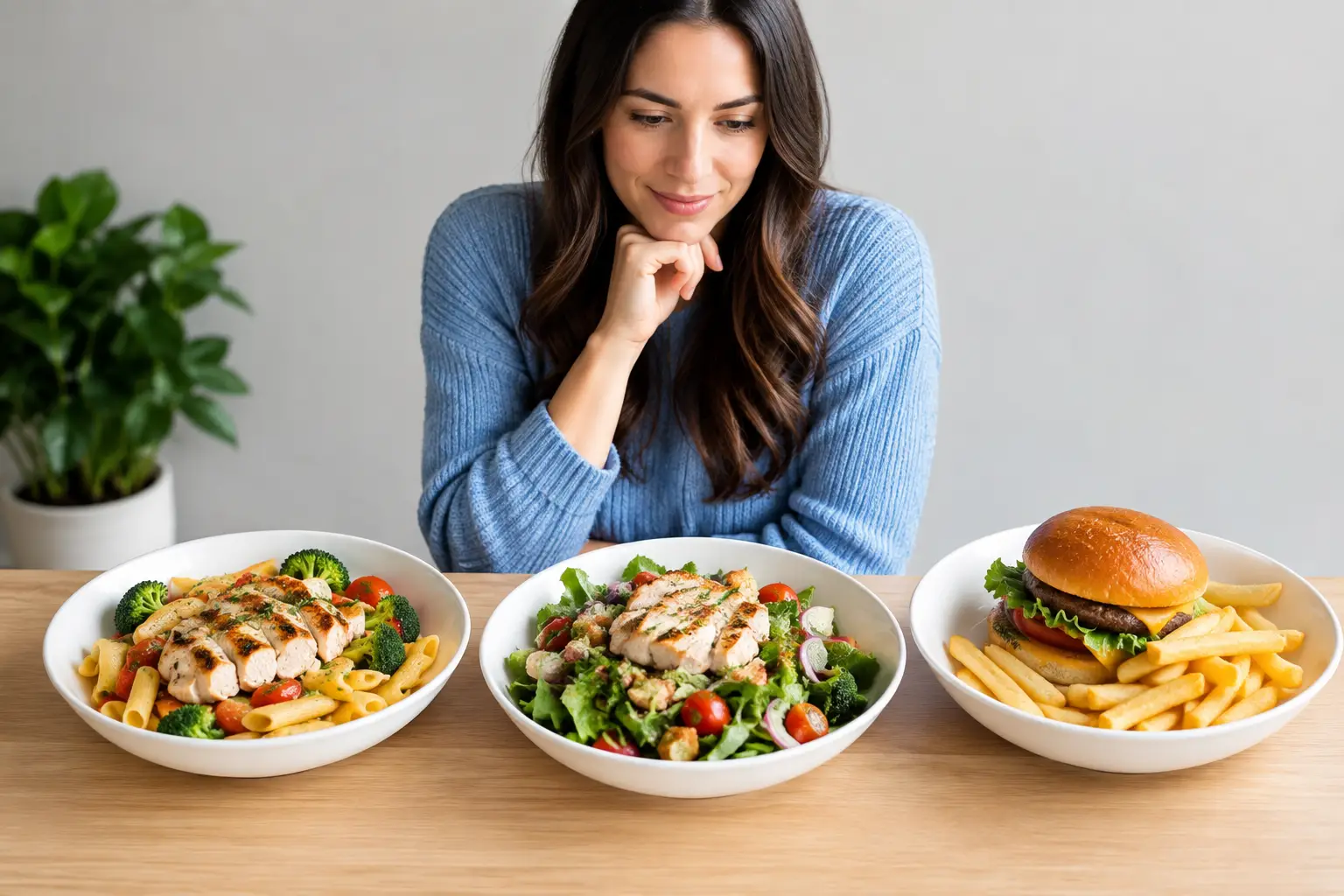
A menu can call something a “hearty bowl,” “generous plate,” or “shareable appetizer” and still leave you guessing. Learning how to compare restaurant portions before you order helps you spend with more confidence, avoid food waste, and choose a meal that actually matches your appetite. The best clue is not a catchy menu description. It is clear visual context.
Why portion size is more than a value question
Portions affect more than whether you get leftovers. They shape your budget, your plans for the day, and whether eating out feels satisfying or frustrating. A $19 entrée may be a great deal if it feeds you twice. That same entrée can feel disappointing if it arrives as a small plate when you expected dinner.
Text-only menus make this harder because restaurant language is subjective. One restaurant’s “large” is another restaurant’s standard serving. A “bowl” might be a deep, filling grain bowl or a shallow dish with a few bites of pasta. Even listed weights can be incomplete: eight ounces of steak does not tell you how much rice, salad, sauce, or vegetables come with it.
This uncertainty can be especially exhausting for people who experience decision fatigue, follow a specific eating routine, manage a limited food budget, or need enough information to make an accessible dining choice. Seeing a real dish gives diners a more honest starting point.
How to compare restaurant portions with real photos
A single food photo can be useful. Two or three photos from different diners are much better. Look for recent, customer-taken images that show the full plate or container rather than a tightly cropped, stylized close-up.
Start by checking the dish against familiar objects. Can you see a standard fork, spoon, chopsticks, drink cup, hand, or takeout container beside it? These everyday references make it easier to judge scale. A burger may look huge in a close-up, but a photo with a soda cup nearby can show whether it is actually a compact slider or a full-size sandwich.
Also pay attention to the plate itself. A mound of food on a small plate may be filling, while the same amount spread across a large plate can look more substantial than it is. Deep bowls, oversized plates, and camera angles can all distort size. Photos taken from above often reveal the amount of food more clearly than low, close shots.
The goal is not to find a perfect measurement. It is to replace a blind guess with a practical estimate: snack-sized, light meal, standard entrée, enough for leftovers, or likely shareable.
Look beyond the main item
A dish is rarely just its headline ingredient. When comparing portions, check what comes with it. Is that chicken sandwich served with a full side of fries, a small handful, or no side at all? Does the burrito come with rice and beans? Is the pasta paired with bread or a salad?
This is where photos can reveal the difference between a satisfying meal and an order that needs an extra side. They can also help you avoid over-ordering. If the appetizer sampler is clearly substantial, your table may not need three starters before entrées arrive.
Compare like with like
The most useful comparison is between similar dishes at the same restaurant. If one diner’s photo shows a generously packed rice bowl and another shows a salad in the same bowl size, you have a better sense of the restaurant’s serving style.
Comparing across restaurants takes more caution. A 12-inch pizza, a burrito, and a poke bowl are not directly comparable by price or plate size. Instead, ask how each fits your meal: Will it feed one person now? Will it make a reasonable lunch tomorrow? Will it work as a shared item alongside other food?
Read menu clues, but treat them as clues
Menu wording still matters, especially when photos are limited. Terms such as “cup” and “bowl” for soup, “half” and “whole” for sandwiches, or “three-piece” for tacos provide useful structure. So do details like “served with two sides,” “family meal,” “for the table,” and “feeds two to four.”
Descriptions can signal a smaller serving, too. Words such as “tasting,” “petite,” “side,” “skewer,” and “small plate” usually mean the item is designed to complement a meal rather than replace one. That does not mean it is a bad value. A small plate may be exactly right if you want variety, are sharing, or prefer a lighter meal.
Nutrition information can offer another reference point when it is available. Calories are not a direct measure of volume, and they do not define whether a meal is right for you. Still, a very low-calorie entrée listed alongside large-looking photos may suggest a lighter portion, while a high-calorie meal with multiple components may be more substantial.
Ask one direct question when the order matters
If you are choosing between two dishes, ordering for a group, or working within a tight budget, a quick question can save a disappointing meal. Ask, “Is this enough for one person as a full meal?” or “Would you say this is more of a side or an entrée portion?”
For shareable food, be specific. “How many people does the nacho order realistically serve if we are also getting entrées?” is more useful than asking whether it is big. Restaurant staff know that “big” means different things to different diners.
There are limits. Portions can vary by location, time of day, and who is preparing the dish. A seasonal special may look different from an older photo, and delivery containers can make a serving appear smaller or larger than it does when plated. Use staff guidance and images together rather than treating either one as a guarantee.
Compare value without chasing the biggest plate
The largest portion is not automatically the best order. Value is about whether the food fits your appetite, preferences, and plans. A huge plate that goes unfinished may not be a better purchase than a smaller meal you enjoy completely. On the other hand, a slightly higher-priced entrée can be the smarter choice if it reliably gives you a second meal.
Think about the full cost of getting satisfied. A low-priced entrée that requires two extra sides may cost more than a complete plate. Delivery fees and minimums matter, too. When ordering takeout, a meal that holds up well as leftovers can offer more value than a larger dish that becomes soggy or loses its texture.
For group dining, portion awareness helps everyone order more fairly. Instead of each person ordering too much “just in case,” use visible portions to decide which dishes are truly for sharing and which ones are personal meals.
Make portion comparisons more accessible
Photos should make dining easier, not create another barrier. For diners with visual impairments, useful food imagery needs clear descriptions that explain the plate, its components, approximate scale, and presentation. “Pasta on a white plate” is not enough. A stronger description might explain that the dish is a shallow bowl of penne with grilled chicken, vegetables, and a dinner-roll-sized piece of garlic bread.
If you use a screen reader, look for image descriptions and menu details that identify serving size or the number of pieces. When that information is missing, call the restaurant or ask a companion to describe what is visible. You deserve the same ability to assess a meal before paying for it.
This is part of why authentic food photos matter. Platforms like Pic-ture That!™ help turn community meal photos into clearer dining information, giving more people a practical view of what they are choosing. When diners contribute accurate images, they make the next person’s decision easier too.
Build a smarter ordering habit
Before placing an order, take a moment to check the dish photo, the sides, and the serving context. Compare it to something familiar, then decide whether it is meant for one meal, two meals, or the table. Over time, you will also learn the portion patterns of restaurants you visit often.
When you have a helpful photo, share it. Include the whole plate or container, not just the most photogenic bite. Honest visuals help other diners order with less guesswork, more confidence, and a better chance of enjoying exactly what arrives.
Leave a Reply