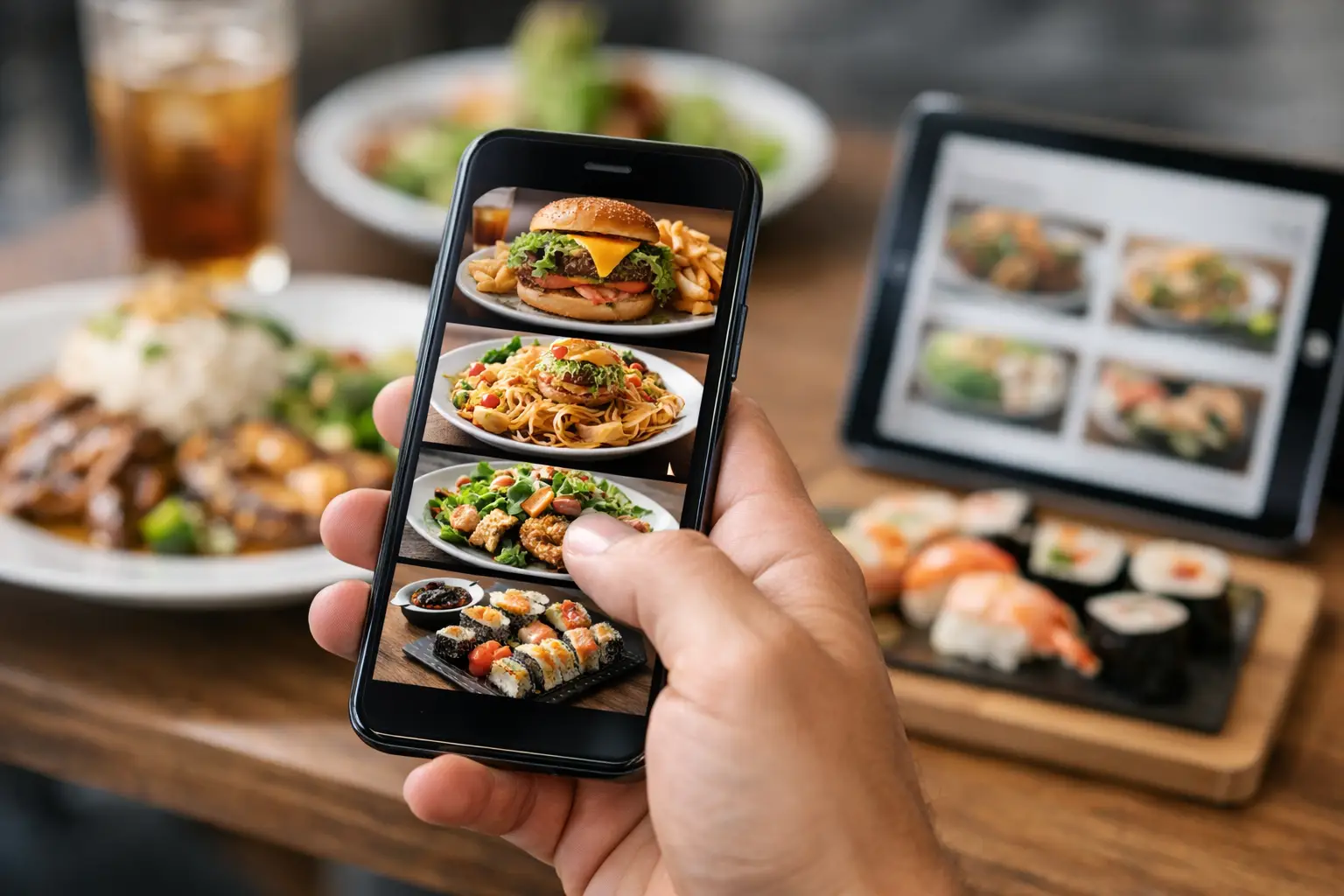
You know the feeling: you’re staring at a menu, trying to decode a vague dish name, and wondering whether the photo in your head matches what will actually show up. A real food photos menu app changes that moment. Instead of guessing from a description, you can see real dishes, make a clearer choice, and order with more confidence.
That sounds simple, but it solves a bigger problem than most people realize. Restaurant menus often assume everyone can picture a dish the same way, parse every ingredient the same way, and feel equally comfortable taking a risk. That is not how real dining decisions work. For many people, text-only menus create friction, uncertainty, and wasted money.
What a real food photos menu app actually solves
Most menu frustration comes down to one thing: missing context. A dish might sound great on paper, but names and descriptions leave out the details people care about. How big is it? Is the sauce heavy or light? Does the dish look fresh, messy, packed, plain, or completely different from what you expected?
A real food photos menu app fills in that gap with authentic images of actual meals. Not polished ad shots. Not stock photography. Real photos that help diners understand what they are about to buy.
That matters for everyday convenience, but it also matters for access. If a person has a visual impairment, relies on visual references, or experiences decision fatigue, traditional menus can feel harder than they should. Ordering food should not require guesswork, stress, or a leap of faith.
Real food photos menu app benefits go beyond convenience
Seeing food before you order is often treated like a nice extra. It is more than that. It supports better decisions, reduces disappointment, and makes dining feel more inclusive.
For some users, photos help compare options faster. For others, they reduce the anxiety of choosing something unfamiliar. A person might avoid wasting money on a dish that looks nothing like what they wanted. Someone else might finally feel comfortable trying a new restaurant because the menu is easier to understand visually.
There is also a trust factor. Real dish photos create transparency. They show what restaurants are actually serving, not just what marketing teams want people to imagine. That kind of honesty builds confidence, especially when dining costs are high and people want to feel good about what they ordered.
Why authenticity matters more than polished food marketing
There is a big difference between promotional food imagery and useful food imagery. Restaurants have every reason to present dishes in the best possible light. That is normal. But a heavily styled image does not always help diners decide whether a meal is right for them.
Authentic photos tell a more practical story. They show portion size, plating, texture, toppings, sides, and visual details that menu copy often misses. That makes them more helpful for real decision-making.
Of course, authenticity comes with trade-offs. User-submitted photos may vary in lighting, angle, or quality. But that is often a fair exchange if the image is honest and current. Most diners would rather see a real plate taken on a phone than a perfect photo that sets the wrong expectation.
This is where community-powered platforms become powerful. When many people contribute real meal photos, the menu becomes more representative over time. One image can help. A photo library from actual diners can change how people order.
Accessibility is not a side benefit
Food discovery is often discussed as a convenience issue, but for many users, it is also an accessibility issue. A real food photos menu app can support people who need more than text to navigate choices with confidence.
That includes users with visual impairments who benefit from image-based context paired with accessible app design. It also includes people with cognitive overload or decision fatigue who need a faster, clearer way to narrow down options. When menus rely only on text, they can create an unnecessary barrier.
Visual clarity helps make dining more equitable. It gives more people the ability to assess options on their own terms. That is not about adding a flashy feature. It is about reducing friction in a decision people make every day.
An inclusive dining experience starts before the food arrives. It starts at the moment of choice.
The community piece makes the model stronger
A useful menu photo platform does not need every restaurant to build and maintain perfect image libraries on day one. In fact, one of the smartest ways to grow coverage is through the people already eating the food.
When diners upload real meal photos, they help other users make better decisions. They also help build a more transparent restaurant experience overall. This kind of participation turns the app into more than a browsing tool. It becomes a shared resource.
That community angle matters because restaurant menus change, dishes vary, and local coverage takes time. A user-generated model can adapt faster than a top-down system alone. It also creates a stronger sense of ownership. People are not just consuming content. They are improving the experience for everyone else.
Rewards can help, too. Earning restaurant gift cards or similar perks gives contributors a reason to keep uploading. But the bigger value is that each photo removes a little more uncertainty for the next person.
What users should expect from a good real food photos menu app
Not every food photo app will be equally helpful. Some focus more on aesthetics than utility. Others may have limited coverage or inconsistent image quality. The strongest platforms usually get a few core things right.
First, the photos need to be tied clearly to actual menu items. That sounds obvious, but accuracy matters. A beautiful image is not useful if it is mislabeled or out of date.
Second, the experience should be fast and mobile-friendly. Most users are checking menus while on the go, standing in line, deciding on takeout, or debating what to order with friends. If the app is clunky, the value drops quickly.
Third, accessibility should be built into the product, not added later. Clear navigation, readable design, and thoughtful user experience make a real difference.
Finally, the platform should encourage fresh contributions. Restaurants evolve, and menu transparency only works when the visuals reflect what people are actually being served.
Why this matters now
Dining has become more digital, but menus still leave too much unsaid. People order from their phones, compare options in seconds, and spend real money without a clear picture of what they are getting. That gap feels increasingly outdated.
A real food photos menu app meets people where they already are: on mobile, looking for clarity, and trying to avoid bad orders. It fits the way people actually make decisions now.
It also reflects a bigger shift in consumer expectations. People want transparency. They want proof, not just promises. They want to feel included in experiences that were often designed around assumptions. Food is no exception.
This is one reason the idea behind Pic-ture That!™ resonates. It treats real food imagery as a practical tool for confidence, access, and better choices, not just a visual extra.
The bigger picture behind better menu visibility
When people can see their options clearly, they make more informed decisions. That leads to fewer disappointing orders, less wasted money, and a better restaurant experience overall. But the impact goes beyond individual meals.
Better menu visibility can help set a new standard for transparency in dining. It can encourage restaurants to think more carefully about how their food is presented and understood. It can also give users a stronger voice in shaping how food information is shared.
Will every dish photo answer every question? No. Some foods still vary by location, timing, or preparation. And some users will always want ingredient details, allergy information, or reviews alongside images. That is fair. Photos are not the whole solution.
But they are a meaningful part of it. They make menus more human, more usable, and more honest.
If ordering food has ever felt like a gamble, that is exactly why this category matters. People deserve to see what they are paying for before they tap order, and the more we build around that idea, the better dining gets for everyone.
Leave a Reply