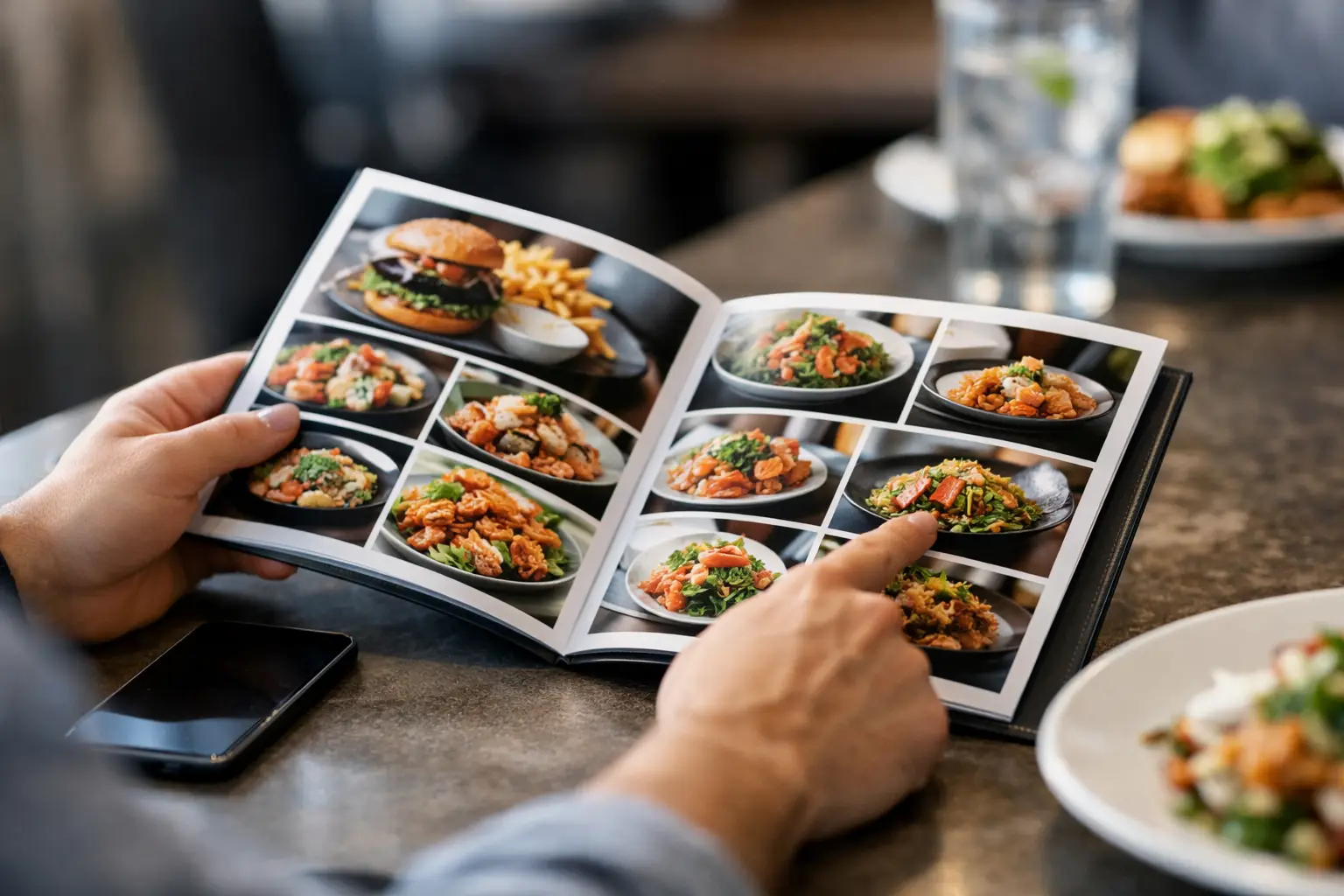
You know the feeling. You scan a menu, land on a dish that sounds amazing, place the order, and then the plate arrives looking nothing like what you pictured. Maybe the portion is smaller than expected. Maybe the sauce covers everything. Maybe the “crispy” item is actually soft, or the bowl that sounded fresh and balanced turns out heavy and bland. Menu photos before you order can change that entire experience.
For a lot of diners, this is not a small convenience. It is the difference between ordering with confidence and spending money on a meal that misses the mark. And for people with visual impairments, decision fatigue, dietary concerns, or plain old ordering burnout, real food images are not extra. They are useful information.
The real problem with text-only menus
Most menus were built around description first. That works up to a point. A restaurant can tell you a sandwich includes grilled chicken, pepper jack, avocado, aioli, and brioche. What it cannot easily tell you is whether that sandwich is stacked high, lightly dressed, messy, tiny, over-toasted, or served with a side that changes the whole value of the meal.
That gap matters because food is visual. People do not just buy ingredients. They buy expectations – portion size, presentation, texture, freshness, and even whether a dish feels worth the price. When that visual information is missing, people fill in the blanks themselves. Sometimes they guess right. A lot of the time, they do not.
This is where menu photos before you order become more than a nice feature. They help close the gap between menu language and the actual plate. That means fewer disappointing surprises and better decisions before money is spent.
Why menu photos before you order matter
The biggest benefit is clarity. Seeing a real image of a dish helps diners understand what they are actually getting, not what they hope the description means. That can save time, reduce stress, and cut down on the all-too-common regret of ordering the wrong thing.
There is also a trust factor. Stock photography and polished restaurant marketing shots can create unrealistic expectations. Real menu photos, especially community-contributed ones, tend to be more honest. They show the dish as it usually appears, in normal lighting, on a real table. That kind of transparency helps people make smarter choices.
It also changes how people interact with menus. Instead of decoding vague phrases like “house style” or “chef’s favorite,” diners can quickly compare actual dishes and decide what looks appealing. For mobile-first users ordering on the go, that speed matters.
Accessibility is a real part of this conversation
Food photos are often treated as a marketing extra. That misses the point.
For many users, visual menu discovery supports accessibility. A person with a visual impairment may use image descriptions, screen reader support, or shared decision-making tools alongside food photos to better understand a menu. Someone with cognitive overload or decision fatigue may find it easier to choose between dishes when they can compare visuals instead of sorting through blocks of text.
That does not mean photos solve every accessibility challenge on their own. They need thoughtful design around them. Image quality matters. Organization matters. Labeling matters. But when visual information is added intentionally, ordering becomes more inclusive.
That is a big shift. It frames menu photos before you order as a tool for dining confidence, not just a way to tempt people into adding fries.
Better choices, fewer disappointing orders
There is a simple reason people look for dish photos before buying food: they want fewer misses.
A menu description rarely tells the full story on spice level, topping amount, bread thickness, plating style, or whether a dish looks fresh and balanced. It may not show if a salad is mostly lettuce, if a pasta is extra creamy, or if a breakfast plate feels light or heavy. Photos help answer those questions fast.
That matters even more when prices keep climbing. People are less willing to gamble on a $17 lunch or a $28 dinner entree. They want evidence. They want to know if the burger looks worth it, if the sushi roll looks neatly made, or if the dessert is shareable.
It depends, of course, on the photo. One blurry image taken in a dark booth is not always enough. But a growing library of real meal photos gives diners something menus alone often cannot: confidence.
Authentic photos beat polished guesswork
There is a place for professional food photography. Restaurants need clean, appealing visuals. But polished images can also create distance from reality.
The most useful menu photos are often the authentic ones. They show what a dish looks like when it is actually served, not when it is styled for a campaign shoot. That honesty matters because people are trying to answer practical questions. Is the soup thick or brothy? Are the tacos packed or skimpy? Does the smoothie bowl actually look loaded with fruit, or mostly granola?
Community-powered photo libraries are especially strong here. When multiple diners upload images of the same item, patterns emerge. Users can see consistency, portion changes, or how a dish appears across visits. That is more helpful than a single perfect image with ideal lighting.
The social side matters too
Dining is personal, but it is also shared. People ask friends what to order. They scroll reviews. They look up tagged photos before trying a new spot. That behavior is already part of how people eat.
Menu photos before you order simply make that process more direct and more useful. Instead of piecing together random social content, diners can browse dish-specific images built for decision-making. That is a better experience for the person ordering and a better signal for the restaurant too.
It also creates a sense of participation. When users upload meal photos, they are not just posting for attention. They are helping the next person order with more confidence. That community effect is powerful, especially when contributors are rewarded and the goal is bigger than aesthetics.
What diners should look for in menu photo platforms
Not every food photo tool is equally helpful. The best ones focus on clarity over hype.
First, the images should be tied to specific menu items. Random restaurant gallery shots are less useful than seeing the exact burger, bowl, or dessert you are considering. Second, the photos should feel recent and authentic. Third, the platform should make it easy to compare dishes quickly, especially on mobile.
Accessibility features also matter. Clear labels, simple navigation, and thoughtful organization make a big difference. A platform that treats visual food discovery as part of a more inclusive ordering experience will usually be more useful than one built only for promotion.
This is where a brand like Pic-ture That!™ fits naturally. The mission is not just to make food look good. It is to help people see what they are ordering, contribute real images, and make dining more transparent for everyone.
Why restaurants should pay attention
This is not just a diner issue. Restaurants benefit when guests know what to expect.
Clearer expectations can lead to better satisfaction, fewer complaints, and more confident orders. A customer who sees the dish beforehand is less likely to be surprised by portion, presentation, or style. That does not eliminate every mismatch, but it can reduce friction.
There is a trade-off here. Some restaurants worry that authentic user photos are less flattering than professional ones. Sometimes that is true. But transparency tends to build trust over time. If a dish consistently looks good in real customer photos, that is powerful proof. If it does not, that is useful feedback.
The future of ordering is more visual and more honest
People are already used to seeing products before they buy them. Food should not be the exception.
As digital ordering becomes more common, visual menu discovery will feel less like a bonus and more like a baseline expectation. Not because people are picky, but because they are informed. They want fewer surprises, better value, and a clearer sense of what they are saying yes to.
And the strongest version of that future is not built on polished advertising alone. It is built on community, accessibility, and real-world transparency. When diners can see meals before they order, they gain something simple but powerful: the chance to choose with confidence.
That is a better experience for everyone at the table.
Leave a Reply