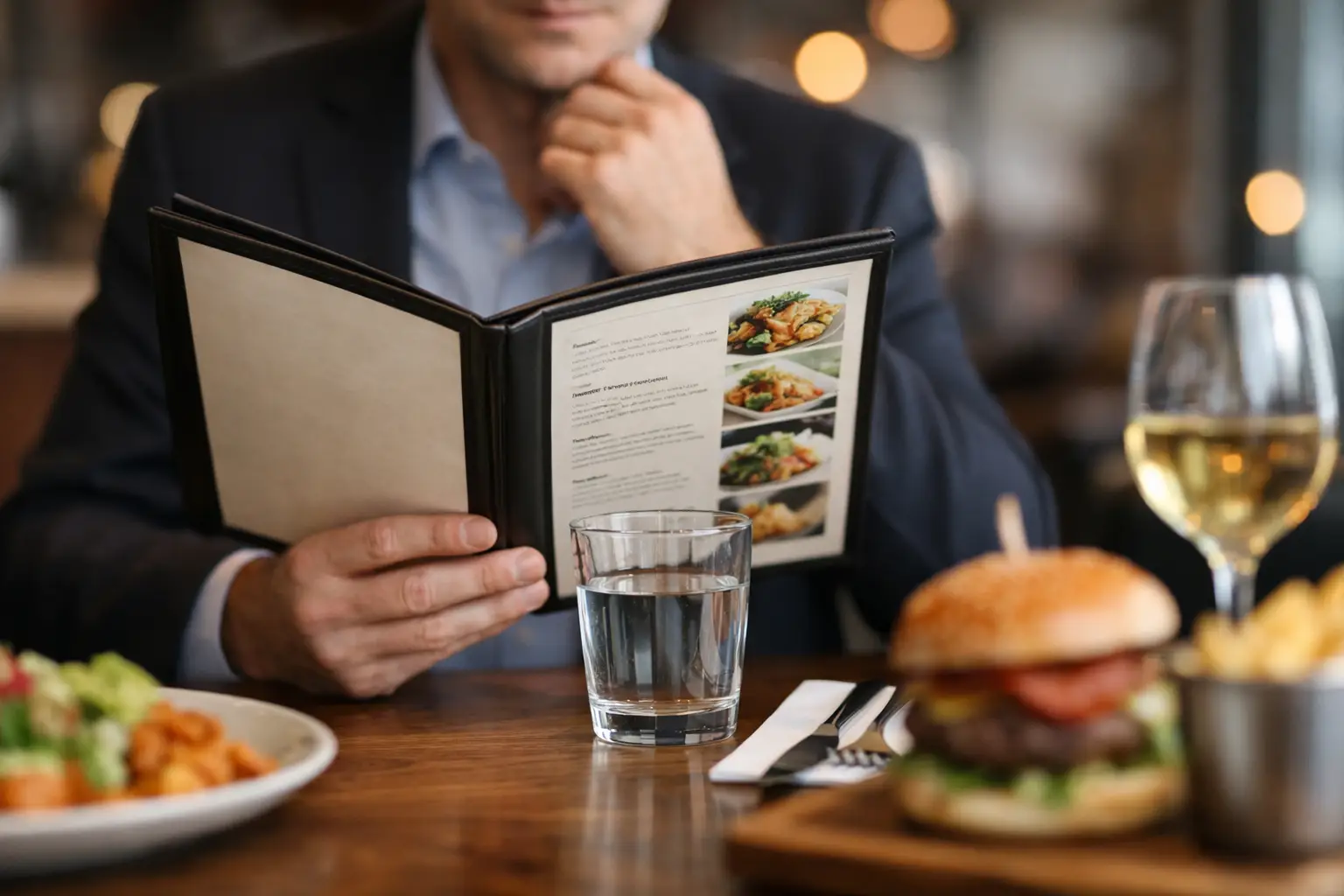
You know the feeling. Your food arrives, and within five seconds you realize you picked the wrong thing. Maybe the portion is tiny. Maybe the “crispy” sandwich is soggy. Maybe the dish sounded great on the menu but looks nothing like what you pictured. If you’ve ever wondered how to avoid menu regret, the good news is that it usually comes down to better information before you order.
Menu regret is not just annoying. It wastes money, turns a meal into a letdown, and makes ordering feel harder than it should. For plenty of diners, especially people dealing with decision fatigue or limited menu visibility, it can also make eating out feel stressful instead of fun. That is exactly why more people want a clearer, more visual way to choose.
Why menu regret happens so often
Most menus ask you to make a decision with incomplete information. You get a dish name, a short description, maybe a few ingredients, and a price. But that still leaves out the details people actually care about: portion size, plating, texture, toppings, side dishes, and whether the meal looks appealing in real life.
Restaurants are not always trying to be vague. Menus have limited space, and food language can only do so much. “House sauce,” “chef’s style,” or “market vegetables” may sound nice, but those phrases do not help much if you are trying to picture what is actually coming to the table.
There is also the expectation gap. A dish can be technically accurate to the menu description and still be disappointing. You may imagine a thick burger and get a thin patty. You may expect a fresh, bright salad and get a bowl heavy on dressing. Menu regret lives in that gap between what you thought you were buying and what shows up.
How to avoid menu regret with better clues
If you want to know how to avoid menu regret, start by treating ordering like a quick decision process instead of a guess. The goal is not to overthink dinner. It is to replace uncertainty with a few reliable clues.
The best clue is simple: see the food before you buy it. Real dish photos give context that text never can. You can spot whether a pasta looks creamy or dry, whether tacos come loaded or minimal, and whether a dessert is worth the price. A real image can answer questions you did not even know you had.
That matters for every diner, but it matters even more when accessibility is part of the experience. If text-heavy menus are difficult to navigate, or if too many similar options create instant mental overload, visual information can reduce friction fast. It is easier to choose when the dish is visible, not just described.
What to check before you commit
A smart order usually comes from checking three things: what the dish actually looks like, how it fits your mood, and whether the price matches the likely payoff.
Start with appearance. Ask yourself if the meal looks like something you genuinely want right now. This sounds obvious, but many bad orders happen because people buy the best-written description instead of the dish that fits the moment. A rich pasta may sound amazing until you realize you wanted something lighter. A giant fried entrée may not be ideal if you need a quick lunch that will not slow you down.
Next, think about portion and balance. Is the plate mostly carbs? Does the protein portion look smaller than expected? Are the sides substantial or just decorative? Photos help here because they reveal scale in a way menu copy rarely does.
Finally, consider risk. Some meals are dependable. Others are a gamble. If a dish has a vague description, a premium price, and no visual reference, your chances of disappointment go up. That does not mean never order anything new. It means recognize when you are making a blind pick.
The hidden role of decision fatigue
Not every disappointing order is about the food itself. Sometimes the problem is that you were already tired of deciding.
Decision fatigue shows up when you have too many options, too little information, and not enough energy to compare everything. At that point, people often rush, default to a random choice, or order what sounds familiar even if it is not what they really want. Then the food arrives, and the regret kicks in.
This is one reason visual discovery changes the experience. Looking through real dish images can narrow choices faster than reading long menu sections line by line. It reduces the mental load. Instead of trying to imagine twelve different entrées from text alone, you can quickly rule out what does not appeal to you and focus on what does.
That is not about making dining superficial. It is about making it clearer. When people can see what they are choosing, they make more confident decisions.
Why real photos matter more than polished marketing shots
There is a big difference between a stylized promotional image and a real customer photo. Marketing images are designed to sell. Real photos are designed to show. If your goal is to avoid menu regret, accuracy beats perfection.
A polished studio shot might make every burger look huge and every dessert look flawless. But a real-world image tells you what will likely land in front of you. It shows the bun size, the fry portion, the sauce level, and the plating. That kind of honesty builds trust.
This is where community-powered food photos are especially useful. When diners share authentic images, they help the next person order with less guesswork. That makes the menu more transparent and more accessible at the same time. It is not just helpful content. It is practical dining equity.
Pic-ture That!™ is built around that idea: seeing real meals before ordering so people can choose with more confidence, less uncertainty, and a better shot at getting what they actually want.
How to avoid menu regret when trying something new
Trying a new dish should feel exciting, not risky. But there is always a trade-off. Familiar orders are safer. New orders can be better, but only if you have enough information to make a smart choice.
If you are stepping outside your usual order, look for anchors. Choose something with visible ingredients you already like. Check whether the portion looks satisfying. Pay attention to whether the preparation seems aligned with your preferences. For example, if you know you do not love heavily sauced food, a photo can help you catch that before you spend money on it.
It also helps to separate novelty from quality. A dish can be interesting without being right for you. Ordering the menu item with the most unusual name is not always adventurous. Sometimes it is just expensive confusion.
Accessibility is part of a better ordering experience
For some diners, menu regret is a minor frustration. For others, it reflects a bigger issue: menus often are not built for equal access.
People with visual impairments may have limited ways to assess what a dish will actually be. People with cognitive overload or anxiety around decision-making may find long, text-only menus exhausting. And plenty of diners, with or without a formal accessibility need, simply do better with visual information.
That is worth saying clearly: seeing food before ordering is not a luxury feature. It can be an accessibility tool. It supports confidence, independence, and a more inclusive dining experience. When restaurants and food platforms make menus more transparent, they are not just making things convenient. They are making them fairer.
A smarter way to order every time
The best ordering habit is not memorizing menu terms or always sticking to the same meal. It is building a simple filter. Can I see what this dish really looks like? Does it match what I want right now? Does the price feel justified based on what I can actually expect?
When the answer is yes, regret drops fast. When the answer is no, pause before tapping checkout or telling the server your order. A little clarity upfront can save you from a very average lunch and a very annoying bill.
Food should feel worth it. Not just edible, not just convenient, and definitely not disappointing because the menu left too much to the imagination. The next time you order, give yourself permission to ask for better information, trust what you can see, and choose the meal that feels clear before it ever reaches the table.
Leave a Reply