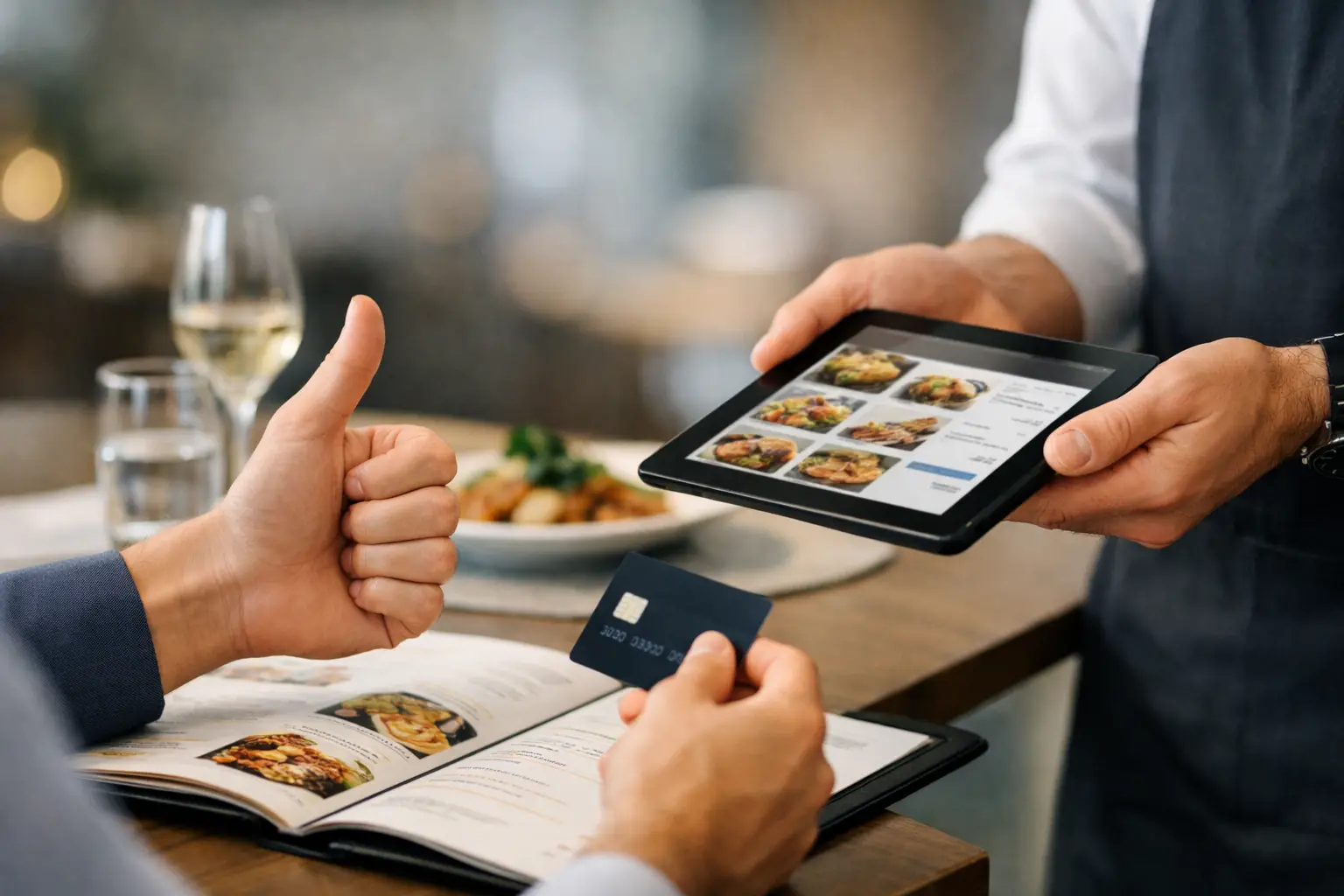
You know the feeling. A menu sounds great, the description seems close enough, and then your food arrives looking nothing like what you pictured. Maybe the portion is smaller, the sauce is heavier, or the dish includes something the menu barely mentioned. If you want to know how to order with confidence, the fix is not guessing better. It is getting better information before you spend.
For a lot of diners, this is not a small annoyance. It is wasted money, decision fatigue, and the stress of choosing from words that leave too much out. For people with visual impairments, text-only menus can create an even bigger gap between what is described and what actually shows up at the table. Seeing real dishes before ordering changes that. It makes the process clearer, more accessible, and far less frustrating.
What how to order with confidence really means
Ordering with confidence is not about knowing every cuisine or becoming a menu expert. It means making a choice with enough clarity that you are not bracing for disappointment. You understand what the dish looks like, how it is likely prepared, and whether it matches what you want right now.
That matters because restaurant menus are built for speed, not always for accuracy. Descriptions are often short. Terms like crispy, loaded, house-style, or spicy can mean very different things depending on the restaurant. Even honest menus leave out visual details that influence satisfaction, like portion size, topping distribution, texture, or plating.
Confidence comes from closing that gap. The more your expectations match reality, the better your ordering decisions become.
Why menu descriptions alone are not enough
A menu can tell you ingredients, but it rarely tells you the whole experience of the dish. A sandwich might list avocado, but not show that there is only a thin spread. A pasta might mention cream sauce, but not make clear how rich or heavy it looks. A salad can sound fresh and balanced, then arrive packed with cheese, dressing, and extras.
This is one reason people reorder the same safe items again and again. Familiar choices feel less risky than new ones. But that also limits the fun of eating out. When you can see authentic food images before ordering, trying something new feels less like a gamble.
That is especially useful when you are hungry, rushed, splitting a bill, ordering for a group, or managing dietary preferences. In those moments, vague descriptions do not help much. Clear visuals do.
How to order with confidence before you buy
The best ordering habits start before checkout. First, pause and decide what you actually want from the meal. Are you looking for something light, comforting, filling, shareable, or easy to eat on the go? A lot of bad orders happen because the dish was not wrong. It just was not right for the moment.
Next, look for real images of the exact menu item whenever possible. Not polished promo photography. Not a brand-perfect hero shot that may have been styled under studio lights. Real photos from actual diners are often more useful because they set realistic expectations. You can quickly judge portion size, toppings, side items, texture, and presentation.
This is where a visual-first tool can make a genuine difference. Pic-ture That!™ was built around a simple idea: seeing what people really received helps you choose with more clarity. That matters for anyone who wants fewer ordering regrets, and it matters even more for accessibility.
If you cannot find a photo, read the menu with a few practical questions in mind. What is the main ingredient? What is likely doing the heavy lifting in the flavor – sauce, seasoning, cheese, oil, or spice? Does the dish sound assembled or cooked to order? Does it include sides, or are those separate? These small checks will not replace an image, but they can make a text-only menu less vague.
Use comparison, not perfection
One underrated part of how to order with confidence is comparing dishes against each other instead of trying to predict one dish perfectly. If you are stuck between two burgers, two bowls, or two pasta options, compare what is easier to understand.
One item may have a clearer ingredient list, a more familiar preparation style, or better visual references. That does not guarantee it will be better, but it does reduce uncertainty. Confidence often comes from choosing the option with fewer unknowns.
This matters because ordering is rarely about finding a perfect meal. It is usually about making a satisfying choice with the information you have. Better comparison leads to better odds.
Confidence looks different for different diners
There is no single rule that works for everyone. Some people care most about portion size because they are stretching their budget. Others are trying to avoid texture surprises. Some need a clearer sense of what is on the plate because visual information makes the decision process more accessible and less exhausting.
For diners with visual impairments, confidence may depend on detailed image support, reliable labeling, and a platform that treats food visibility as a real access need instead of a nice extra. For people who experience decision fatigue, confidence may come from narrowing options fast and seeing enough proof to stop second-guessing.
That is why transparency matters. The more clearly a dish is shown, the more inclusive the ordering experience becomes.
When reviews help and when they do not
Reviews can support confident ordering, but only if you use them well. A review that says the tacos were amazing does not tell you whether they were tiny, messy, heavily sauced, or topped with onions. Opinions are useful, but visuals answer different questions.
The strongest approach is to pair both. Use photos to understand what the dish is, then use reviews to learn whether it was consistent, flavorful, or worth the price. If the images look good but multiple reviews mention sogginess, missing ingredients, or uneven portions, that is worth paying attention to.
At the same time, one bad review should not automatically scare you off. Restaurants have off days, and personal taste varies. Look for patterns, not isolated reactions.
Build your own ordering filter
If you order out often, it helps to create a personal filter for quick decisions. Think about the dishes you usually enjoy and the ones you regret. The pattern is often more obvious than you think.
Maybe you are happiest with meals that have visible components rather than mixed-together ingredients. Maybe you prefer grilled foods over fried ones, or bowls over wraps, or dishes where the sauce comes on the side. Once you know your own preferences, menus become easier to read and images become easier to judge.
This also helps with group ordering. When everyone is hungry and moving fast, having a clear sense of your own baseline makes the process less stressful. You do not need endless debate. You just need enough clarity to make a choice that fits you.
The role of community in ordering better
Confident ordering gets easier when people share what they actually received. That is the value of community-powered food photos. Each upload helps the next person make a clearer choice, avoid disappointment, and spend more wisely.
That community effect is bigger than convenience. It supports transparency in an industry where visuals often lag behind reality. It also creates a more inclusive food experience by giving diners access to practical information that menus alone do not provide.
When people contribute authentic meal photos, they are not just posting food. They are making restaurant discovery more useful for everyone.
How to order with confidence without overthinking it
There is a balance here. Confidence should reduce stress, not create a whole new research project every time you want lunch. You do not need to analyze every menu item in detail. You just need enough evidence to feel good about your choice.
Start simple. Look for a real image. Check whether the dish matches your mood, appetite, and budget. Notice any obvious red flags in reviews. If the information still feels too thin, pick the option with fewer unknowns.
That approach works because it respects real life. Sometimes you have time to compare. Sometimes you do not. The goal is not perfect certainty. It is less risk, more clarity, and a better shot at getting what you actually want.
A better food experience starts before the first bite. When diners can see more, they can choose better, and that makes every order feel a little more fair, a little more accessible, and a lot more satisfying.
Leave a Reply