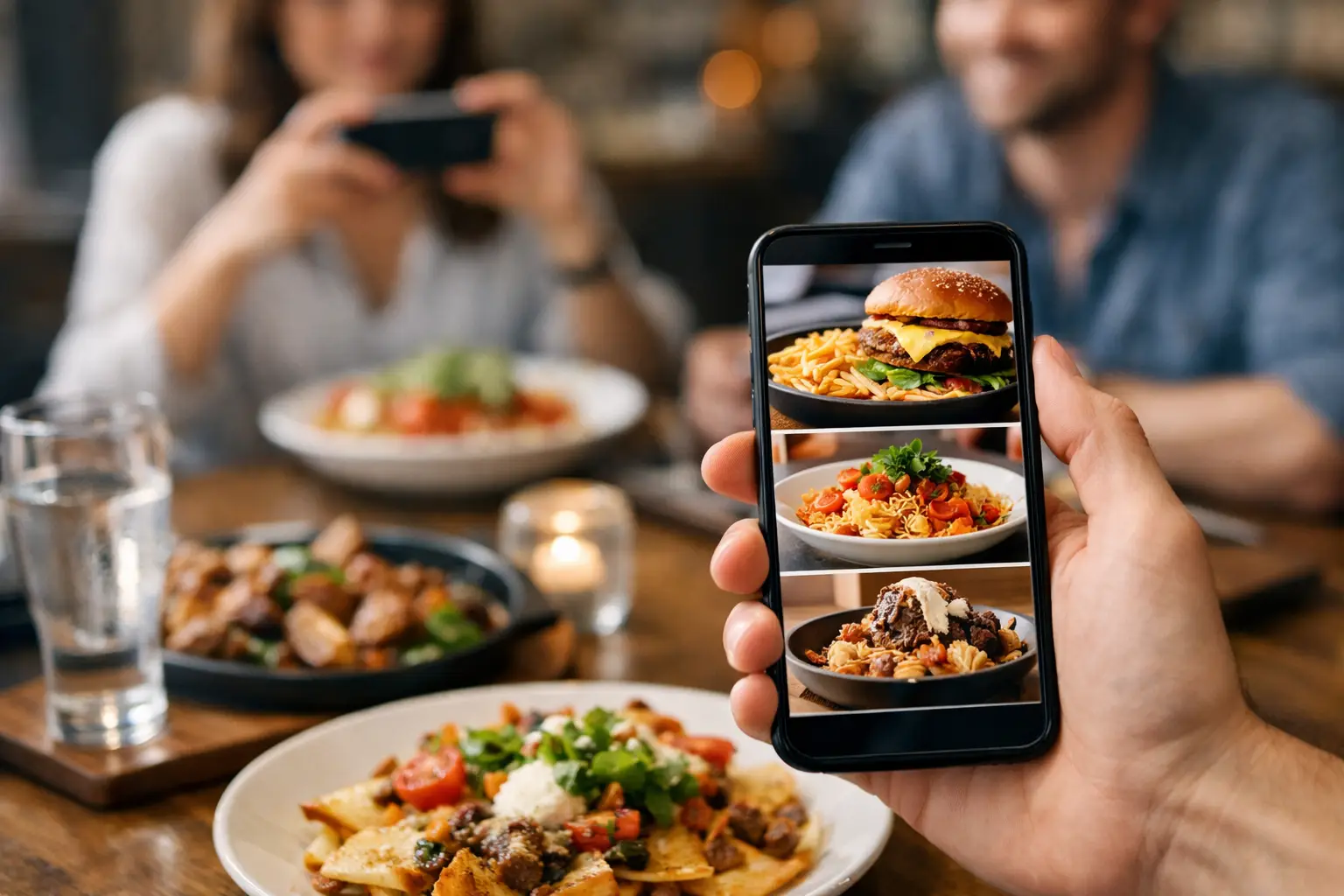
You know the feeling: you order the dish that sounded perfect, then the plate shows up looking nothing like what you pictured. Maybe the portion is smaller than expected. Maybe the sauce covers everything. Maybe the texture is clearly not for you. A restaurant app with user submitted photos changes that moment before it happens by showing real dishes, from real diners, before you spend your money.
That idea sounds simple, but it solves a bigger problem than most restaurant tech does. Menus are usually built around text, and text leaves a lot open to interpretation. Words like crispy, hearty, spicy, house-style, and chef’s favorite do not tell you what the meal actually looks like. For many people, that is a mild annoyance. For others, especially people with visual impairments or decision fatigue, it can turn ordering into a frustrating guessing game.
Why a restaurant app with user submitted photos matters
Most food apps focus on delivery speed, discounts, or polished marketing images. Those things can be useful, but they do not always help you make a confident choice. Studio photos are often limited, heavily styled, or only available for a small part of the menu. They can also set expectations that the actual dish does not meet.
User-submitted photos offer something different: proof. They show how a dish looks when it is actually ordered, plated, packed, and served. That can help diners understand portion size, toppings, side items, presentation, and even consistency across visits. It is less about selling the fantasy of a meal and more about showing the reality of it.
That shift matters because better information leads to better choices. When diners can see what they are ordering, they are more likely to feel good about the purchase. They are less likely to end up with food they did not want, less likely to waste money, and more likely to trust the platform they used to decide.
The real value is accessibility, not just convenience
A lot of restaurant products talk about convenience. That is part of the story, but it is not the full story here. A restaurant app with user submitted photos can also make dining more accessible.
If you live with a visual impairment, a text-only menu may not provide enough context to make a comfortable decision, even with screen reader support. If you deal with decision fatigue, vague menu descriptions can make ordering feel exhausting instead of enjoyable. If you have texture preferences, sensory sensitivities, or strong expectations around ingredients and presentation, seeing a real image can remove a surprising amount of stress.
This is where food transparency becomes more than a nice extra. It becomes a tool for confidence and independence. Seeing what a meal actually looks like helps people order on their own terms. That is a meaningful difference.
What makes user-submitted food photos more useful than restaurant images
Restaurant-provided images usually serve a marketing goal. They are designed to look polished, and there is nothing wrong with that. But polished is not always informative.
User photos tend to answer more practical questions. Is the burger actually stacked that high? How much rice comes with the bowl? Are the fries thick-cut or shoestring? Does the pasta arrive heavy on sauce or lightly coated? Is the salad mostly greens, or is it loaded with toppings?
Those details shape whether a meal feels worth ordering. They also help set honest expectations. Of course, user-submitted content is not perfect. Lighting varies. Angles vary. Photo quality varies. One person’s upload may not capture every detail another diner cares about. Still, a collection of real photos often gives a more trustworthy picture than one professionally styled image.
The best experience usually combines authenticity with quality standards. That means encouraging clear photos, organizing them by menu item, and building enough volume that diners can see more than one version of the dish. It is community content, but it works best when it is thoughtfully structured.
What diners want from a restaurant app with user submitted photos
People are not just looking for a photo gallery. They want clarity that helps them decide fast.
A useful app should make it easy to search for a restaurant, find a menu item, and quickly view real images tied to that exact dish. It should reduce uncertainty, not add more noise. If users have to guess whether a photo matches the current menu item or scroll through random uploads with no context, the benefit drops fast.
Trust also matters. Diners want to know the photos are recent enough to be relevant and accurate enough to be helpful. Menus change. Restaurants update plating. Limited-time items come and go. A strong platform needs enough community activity to keep the photo library fresh.
That is why participation matters so much. The more people contribute, the more useful the app becomes for everyone else. One upload helps the next diner. Ten uploads turn a menu item into something you can actually evaluate.
Why rewards help the model work
User-generated platforms often depend on a simple truth: people are more likely to contribute when the value is clear. In a food app, that value can be social, practical, and tangible at the same time.
Some users enjoy sharing what they ordered and helping others avoid bad picks. Others like being part of a growing community that improves dining transparency. And for many people, rewards add the extra push that turns good intentions into action. Earning restaurant gift cards or similar perks for uploading meal photos gives users a reason to keep contributing.
That approach is not just about growth. It is about building coverage where coverage does not exist yet. New platforms need early contributors to fill in menu gaps, surface useful feedback, and create momentum. Rewards can speed that up without losing the community-centered feel.
The trade-offs are real, and they can be managed
A restaurant app built around user-submitted photos is powerful, but it is not magic. Coverage starts uneven. Popular chains may fill up quickly while local spots take longer. Some dishes photograph well, while others are harder to capture accurately. A photo can show portion size, but it cannot tell you if the food is underseasoned.
There is also the quality question. If anyone can upload anything, the platform needs moderation standards. Blurry images, wrong dish labels, duplicates, or outdated menu items can weaken trust. The answer is not to remove the community element. It is to support it with smart review systems, clear upload guidelines, and product design that prioritizes accuracy.
It also depends on what the diner needs most. If someone just wants the cheapest lunch nearby, photos may not matter much. If someone wants confidence in what they are buying, they matter a lot. The strongest case for this kind of app is not that it replaces every other restaurant tool. It is that it solves a specific problem other tools usually leave behind.
A better dining decision starts before checkout
The most frustrating part of a disappointing meal is that it was often avoidable. Not because the dish was bad, but because the expectation was wrong. When diners can see real food before ordering, they make decisions with less guesswork and more confidence.
That is why this category has real staying power. A restaurant app with user submitted photos does more than add visual appeal to menus. It brings transparency to a part of dining that has stayed oddly opaque for too long. It helps people order with more certainty, supports accessibility in a practical way, and turns everyday diners into contributors who improve the experience for others.
That is the kind of food tech worth paying attention to. Not because it makes ordering flashy, but because it makes ordering clearer. Pic-ture That!™ is part of that shift, and the bigger idea is easy to get behind: if people are spending real money on real meals, they should be able to see what they are choosing first.
The next time a menu leaves too much to the imagination, that gap is your reminder that better dining decisions usually start with one simple thing – an honest photo.